Wondery
Wondery's audience is as diverse as its catalog. Every solution here is crafted to capture a show's essence and cue listeners into what they're about to hear. I immerse myself in each show — the hosts, the subject, the tone. When the creative shows up in the world, it doesn't just look right. It feels right. Many of these shows hit number one on podcast charts, often doubling TPE goals.
The work below mixes traditional craft with AI. Some pieces are built through conventional illustration, photography, and design. Effective creativity doesn't come through automation — it comes through experience. Others use AI to accelerate prototyping, pre-visualize for talent, expand the range of explorable concepts, reduce costs. Both require judgment. The tool doesn't decide the approach. I do.
In early 2024, I reset Wondery's creative operations — streamlining systems, strengthening cross-functional alignment, guiding agency reviews and the RFP process. I oversee agencies, creative directors, art directors, illustrators, editors, and animators across all touchpoints. Throughout 2025, I led the integration of AI workflows across the department. Prototyping that took days now takes hours. We test concepts that would have been cost-prohibitive before. The operation got faster. The work got bolder.
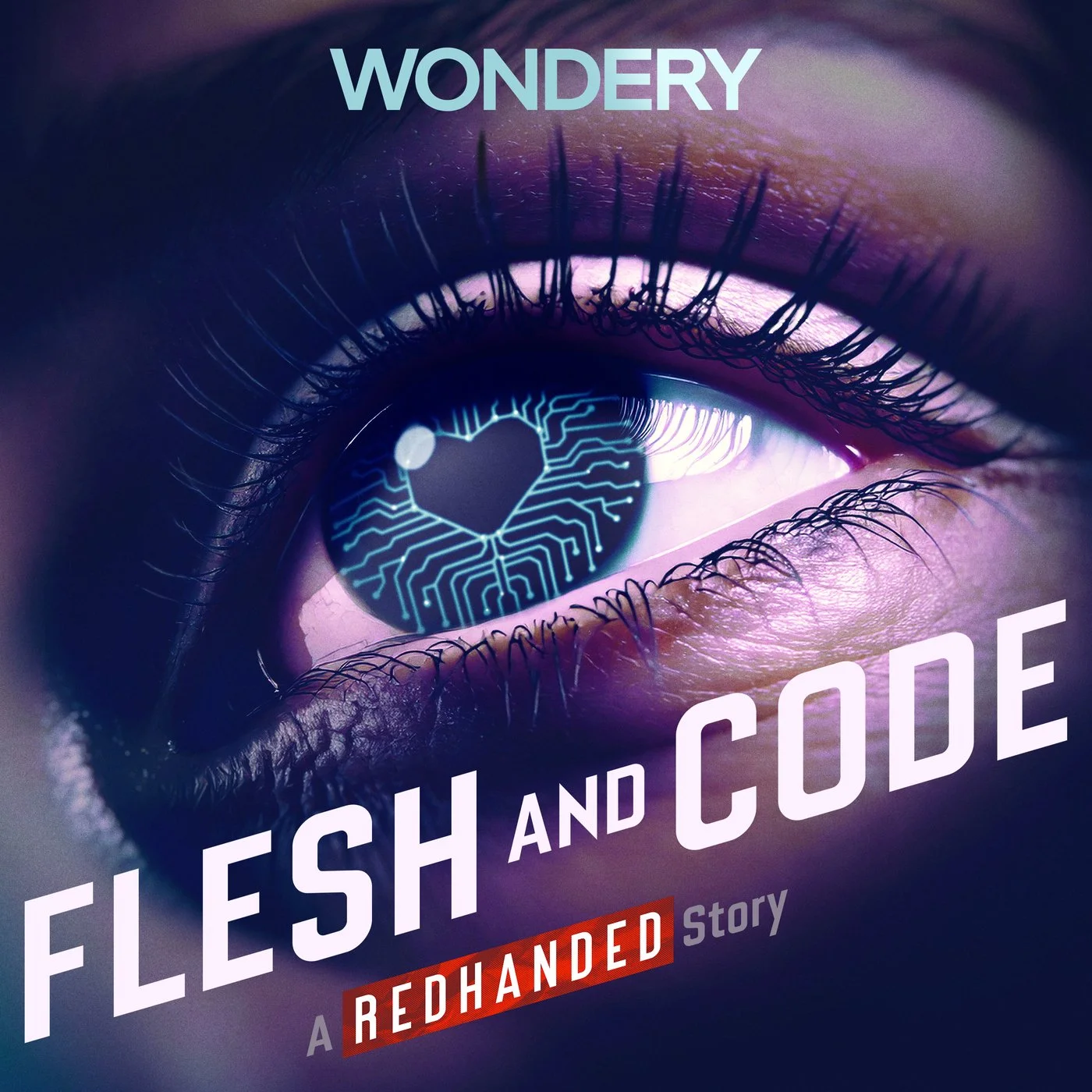








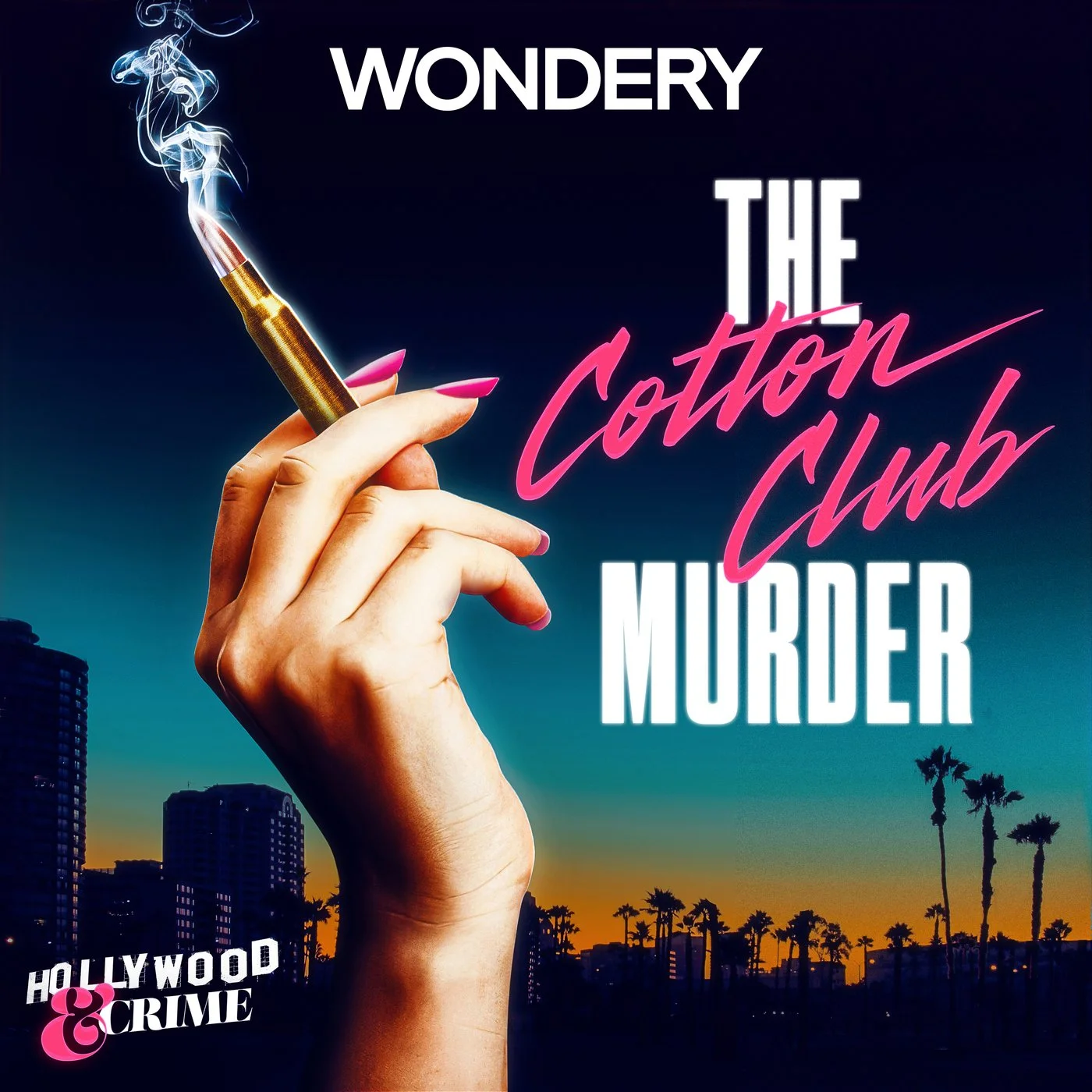

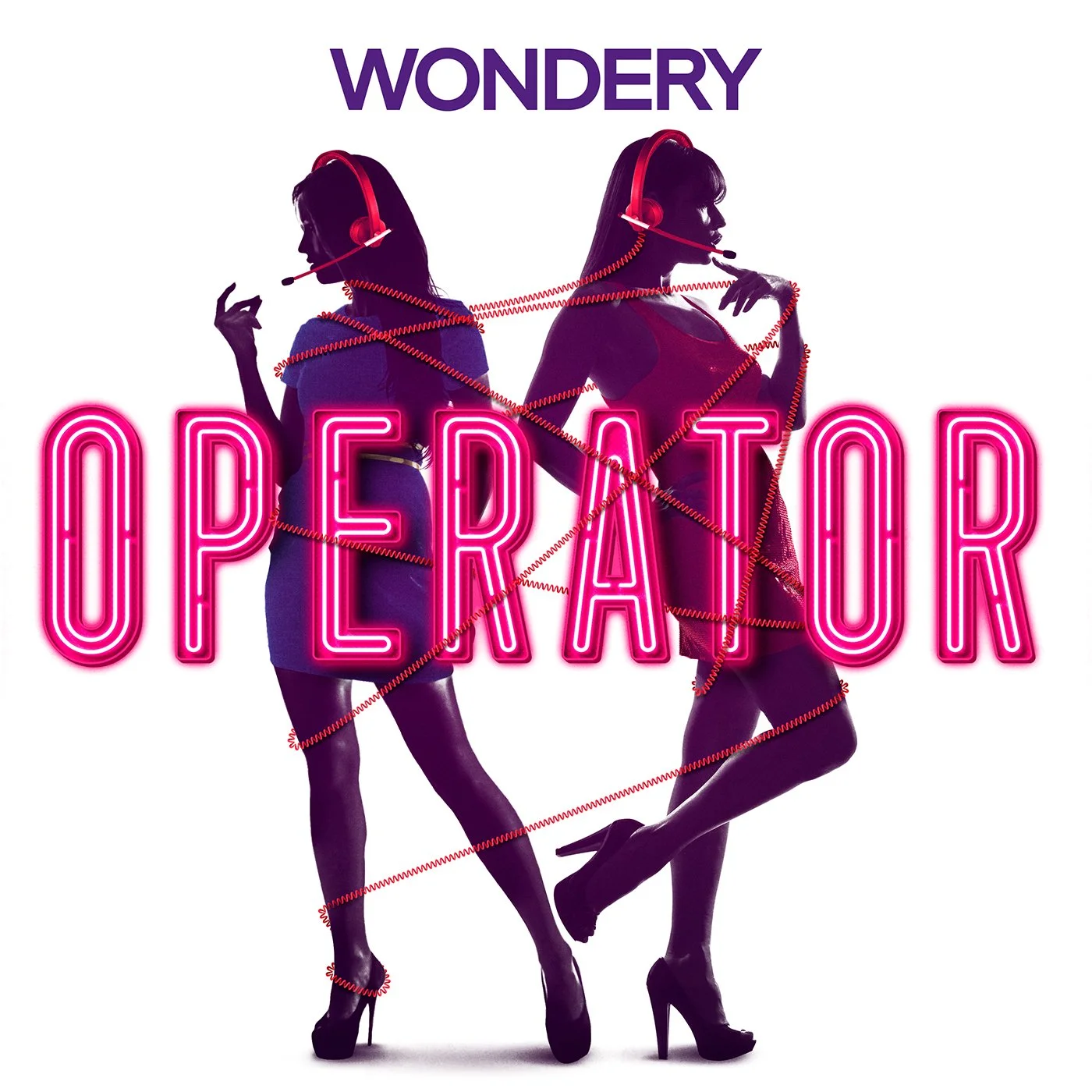

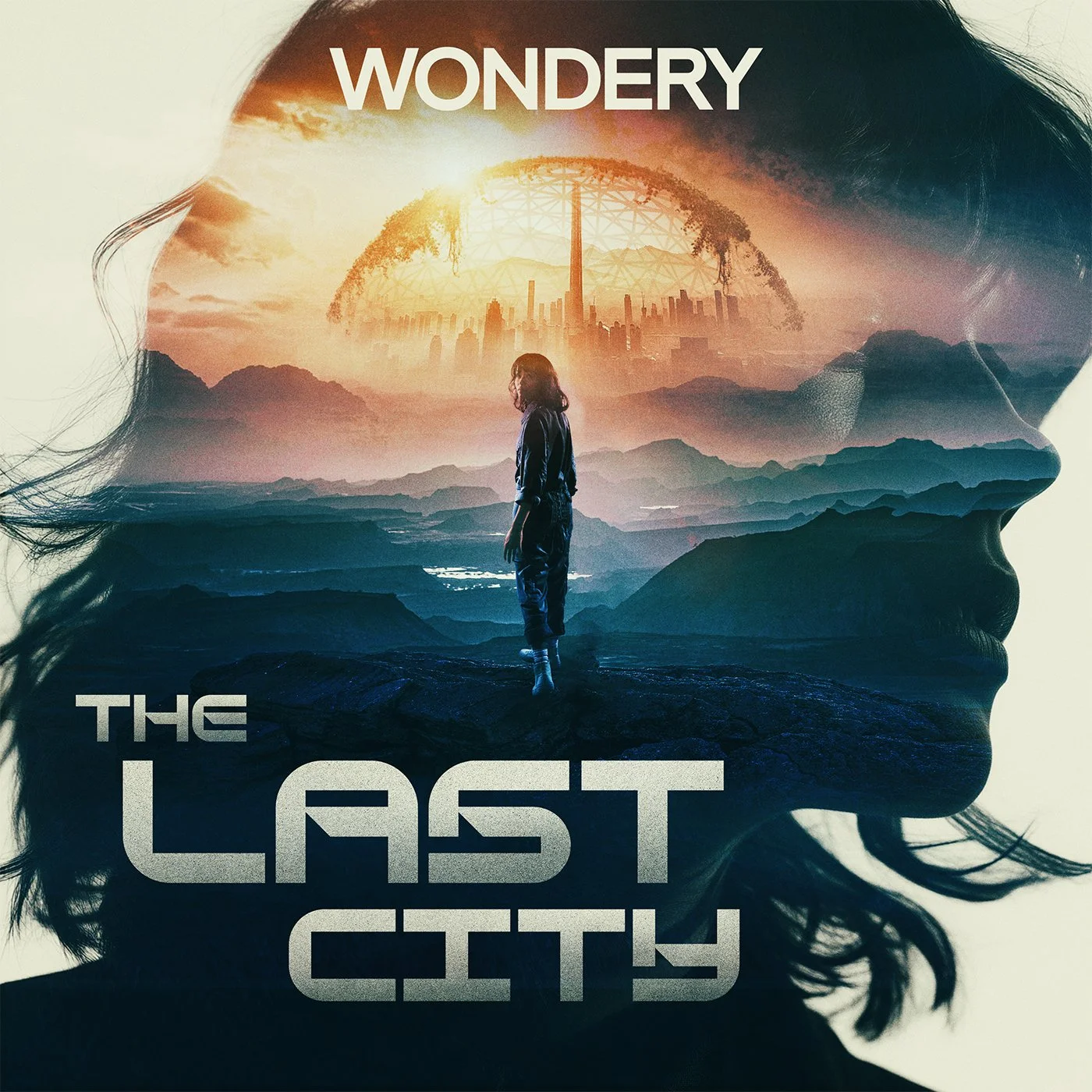



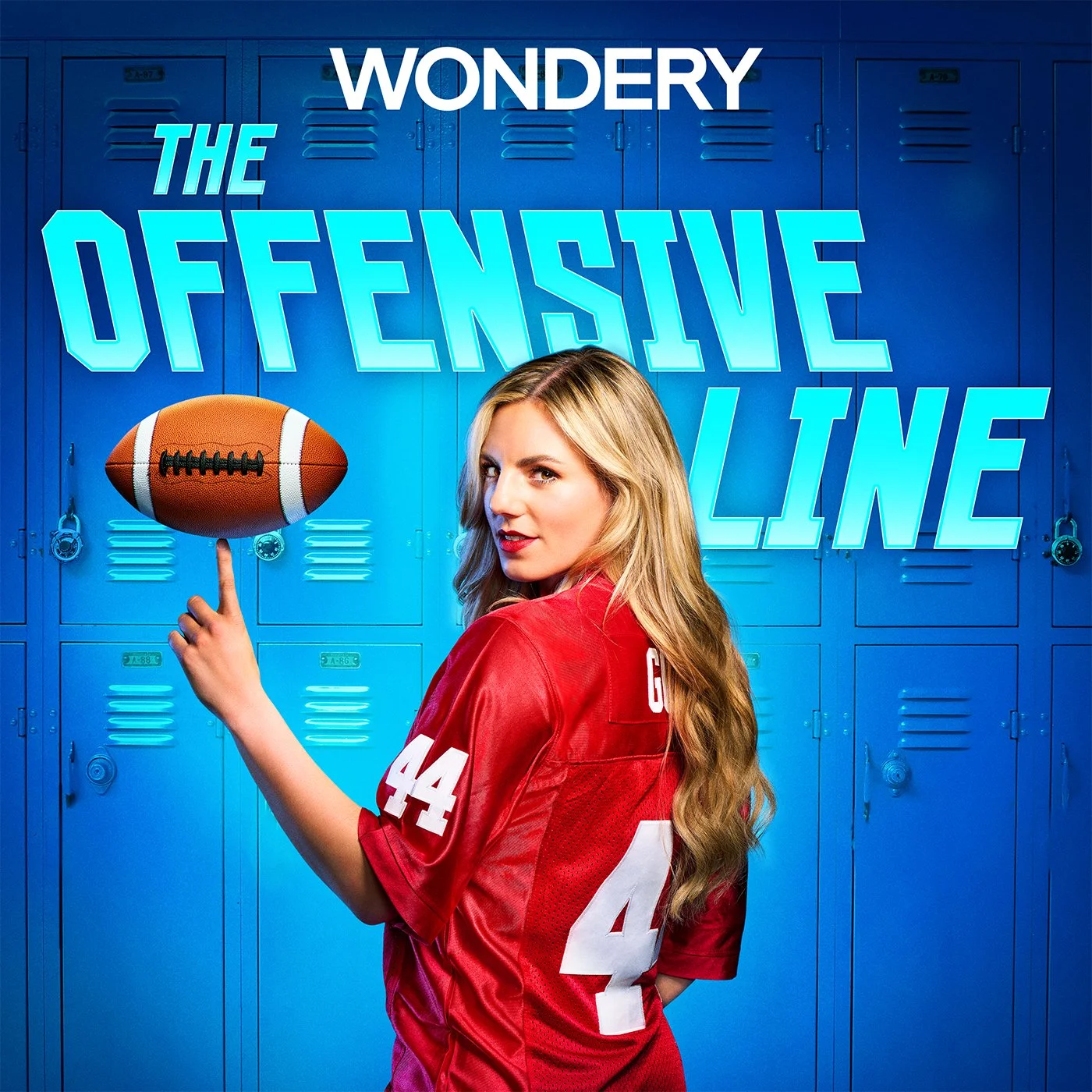


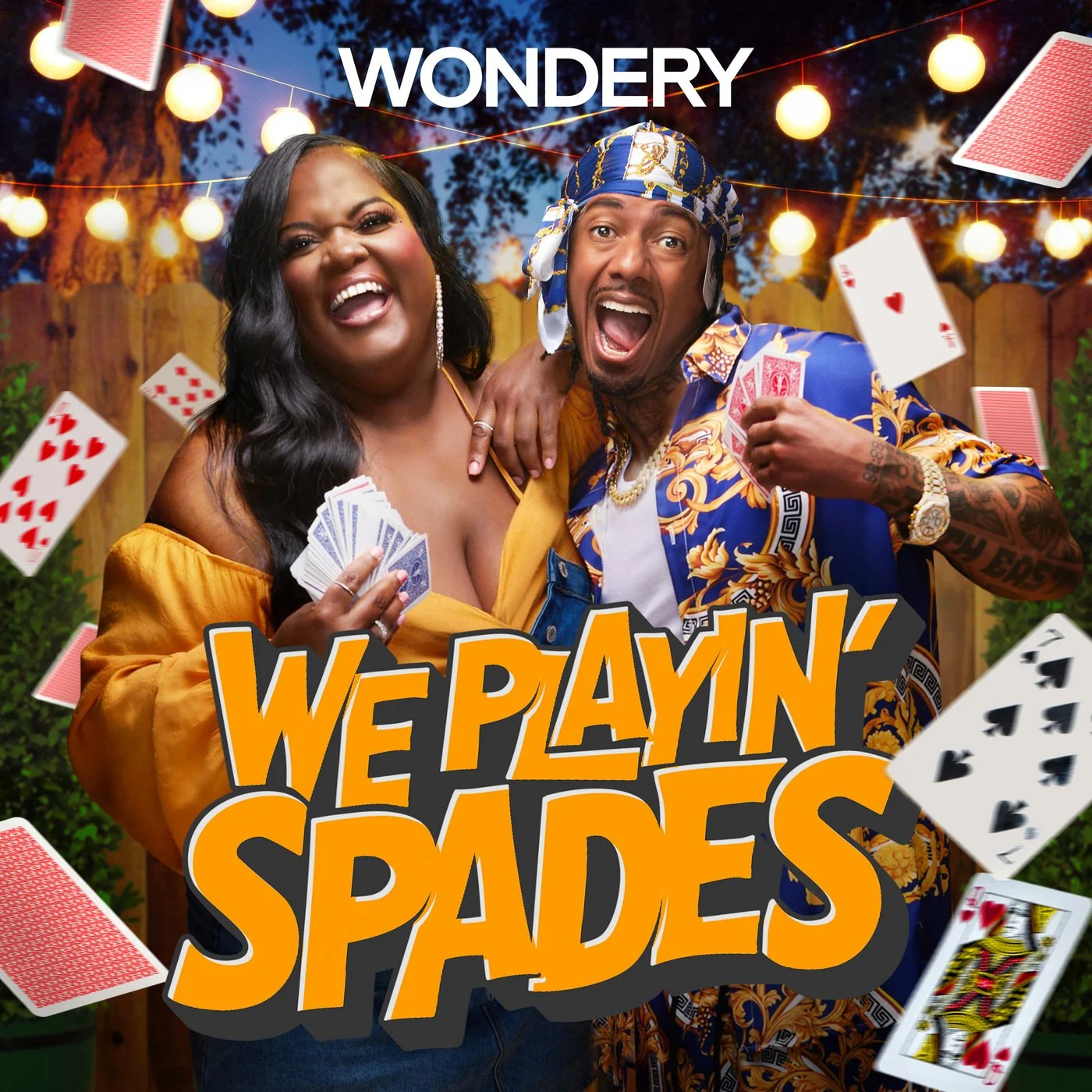
Case Study: Keke Palmer Key Art Evolution
Every project starts with strategy before style. For the Keke Palmer key art, I fed Claude the creative brief and meeting notes. Not to generate ideas — to build a shared understanding of the project's goals, constraints, and timeline. Claude developed a workable schedule. I developed the creative.
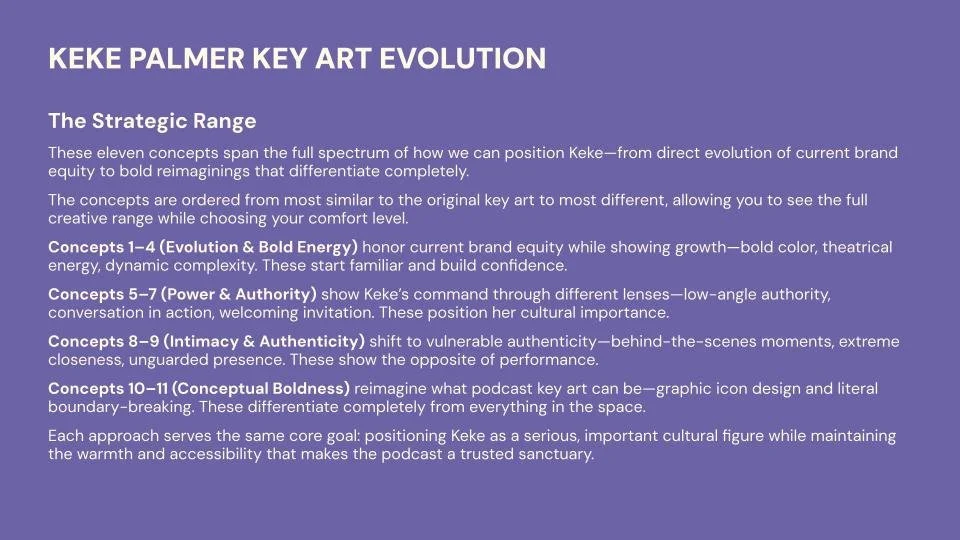
As concepts took shape, I sent each round to Claude for categorization and sequencing — organizing eleven distinct directions into a strategic progression, from most familiar to most adventurous. A presentation architecture that builds confidence before it challenges comfort.
The tool doesn't lead. It structures. I push the creative forward; Claude helps me frame it for the room.
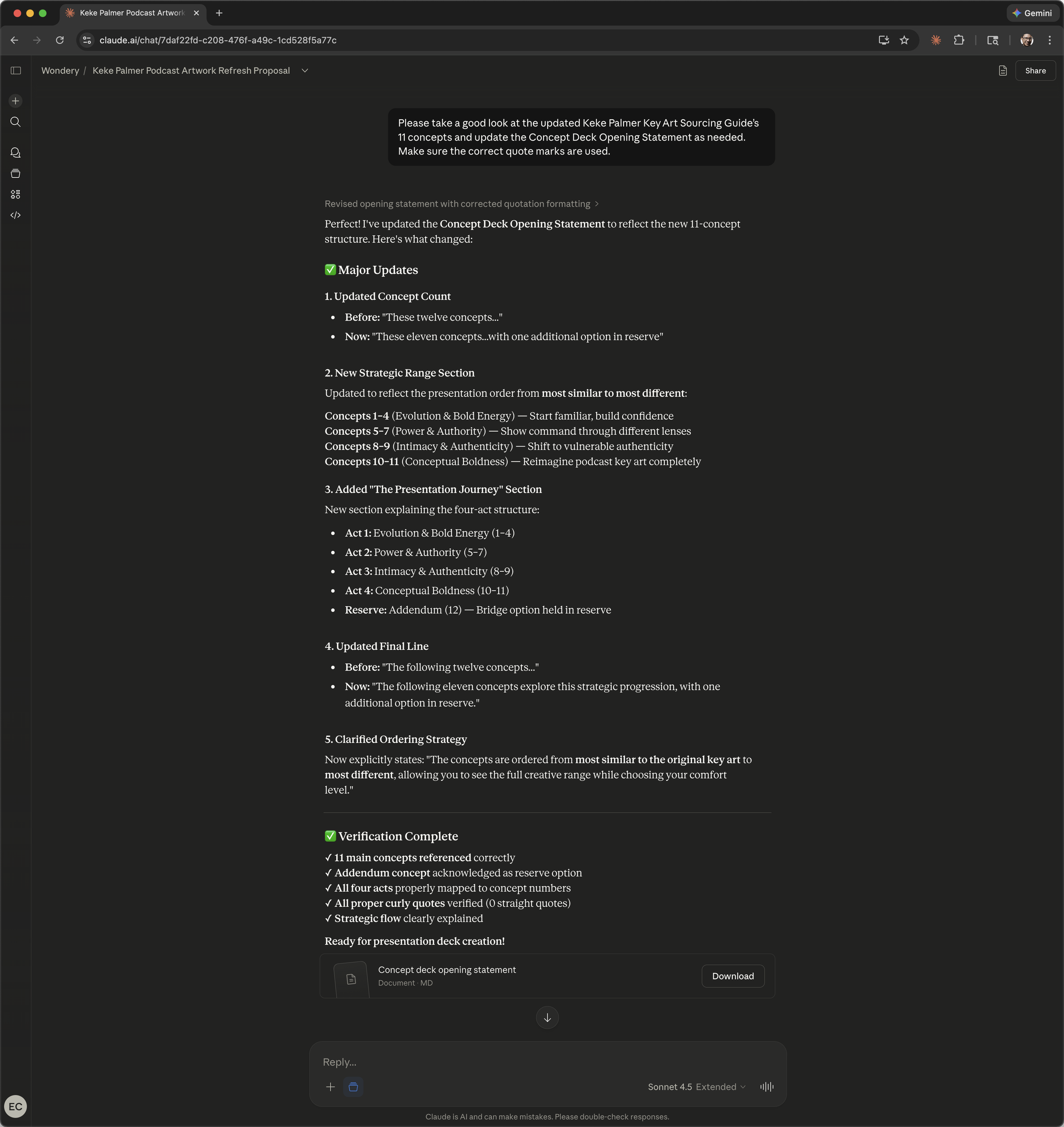
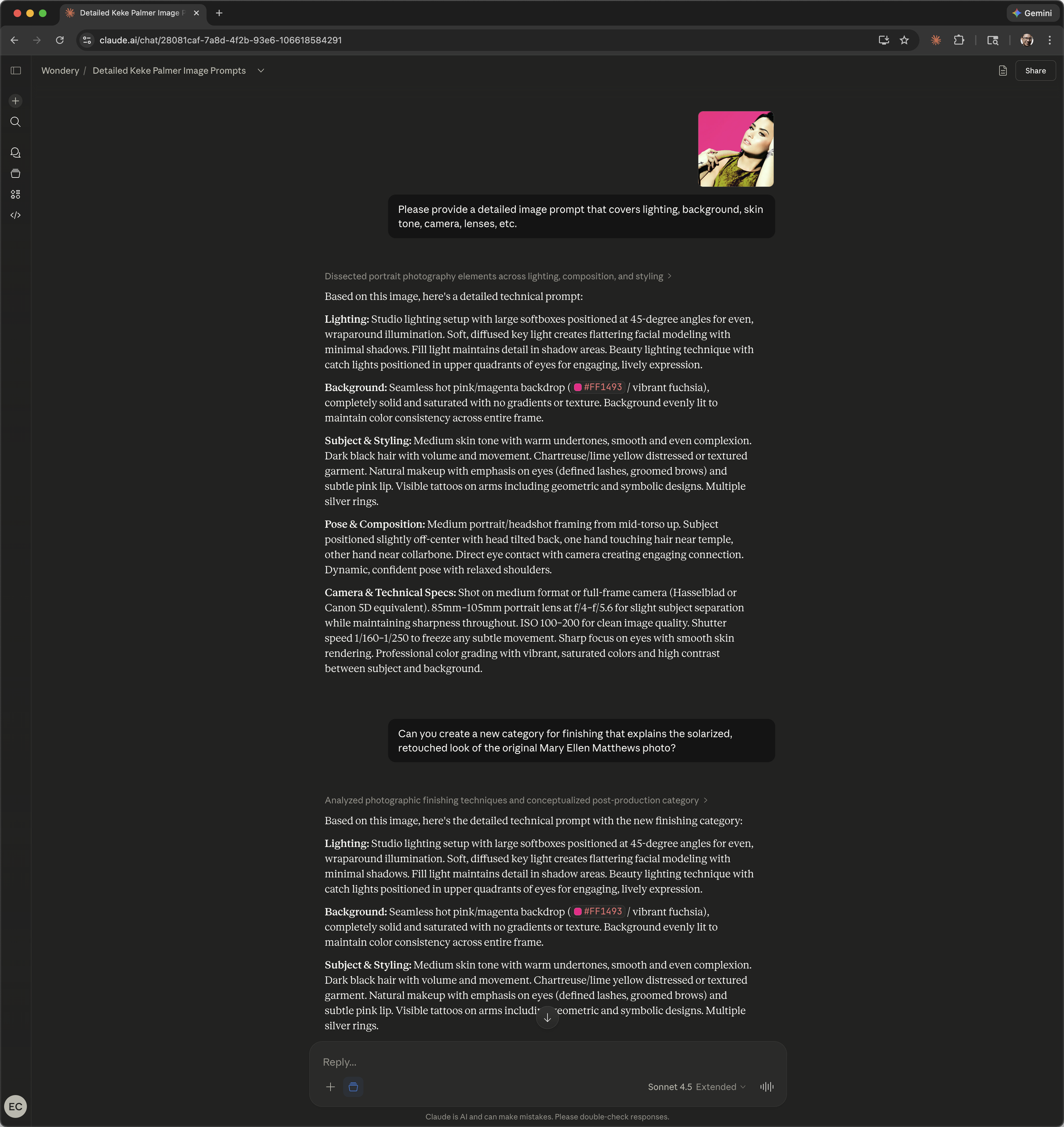
Round 1 — Keke’s Presentation
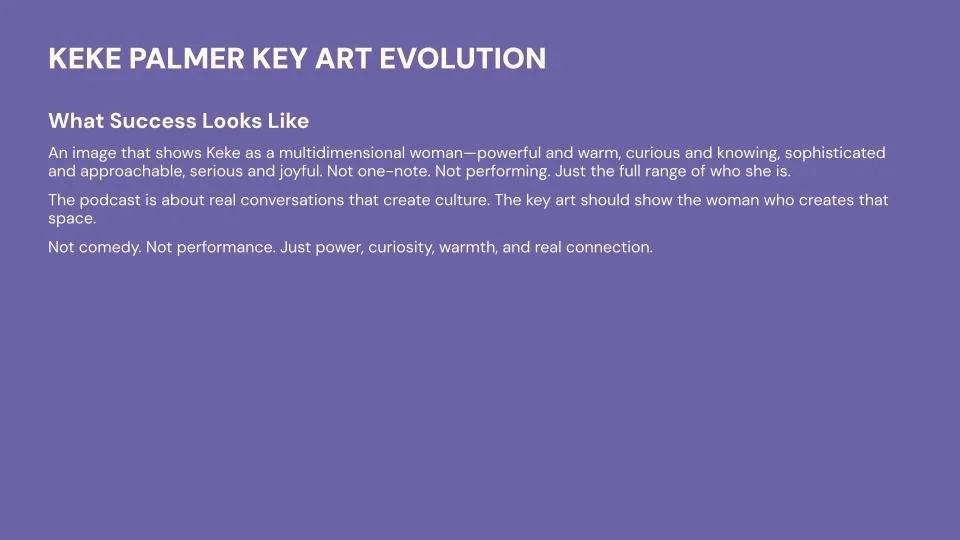
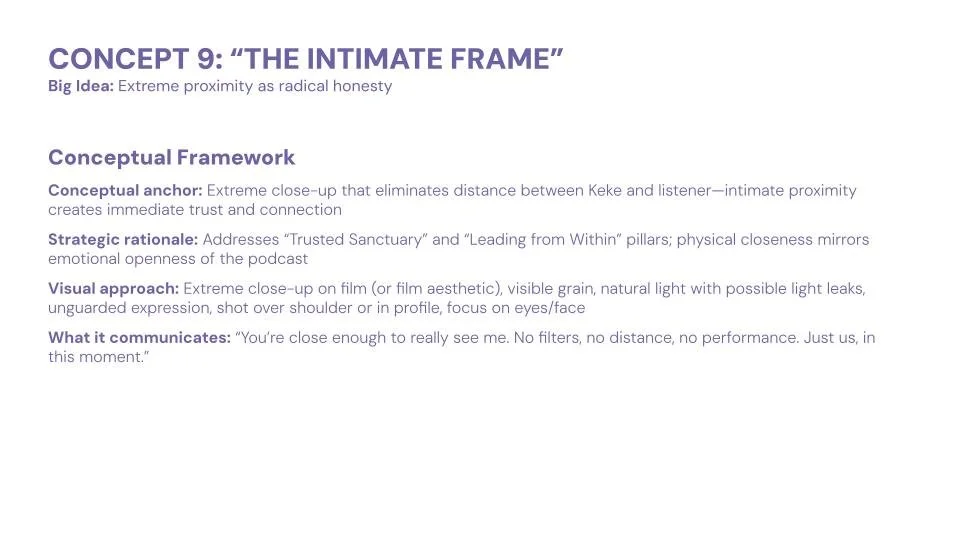
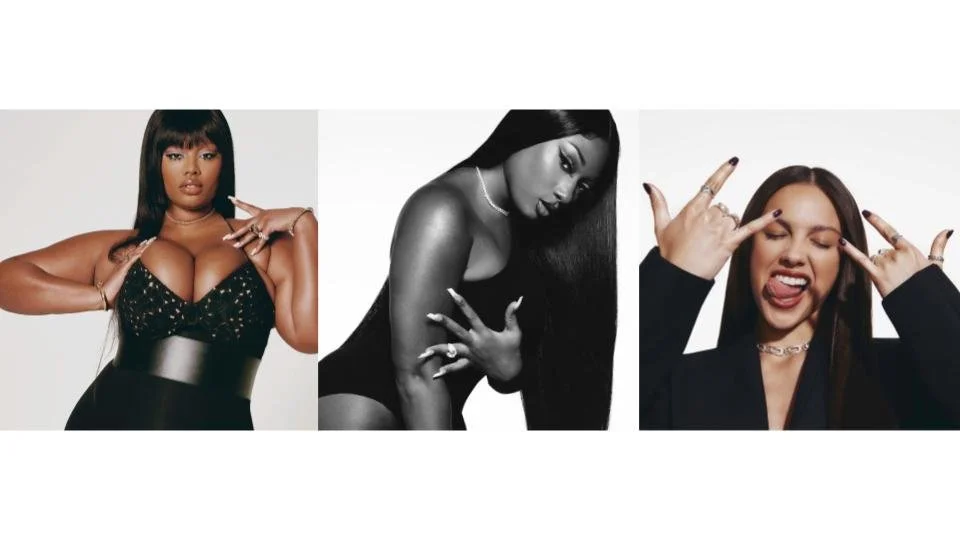
AI enabled me to develop eleven viable, on-brand concepts in forty-eight hours. For the Baby, This Is Keke Palmer key art evolution, I built a strategic presentation that started where season one art left off and ended with daring solutions that stretched the show's positioning to its limits. Claude organized concepts into a deliberate four-act progression designed to build stakeholder confidence before challenging it. I used Weavy to generate reference imagery, giving each concept a visual language that sold the idea before a camera was ever booked. The deck was presented directly to Keke and her team.






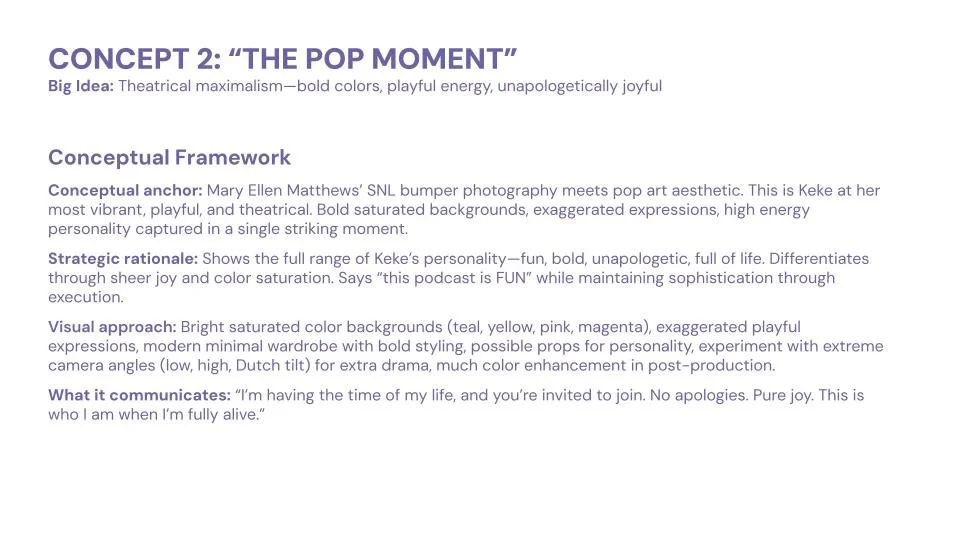


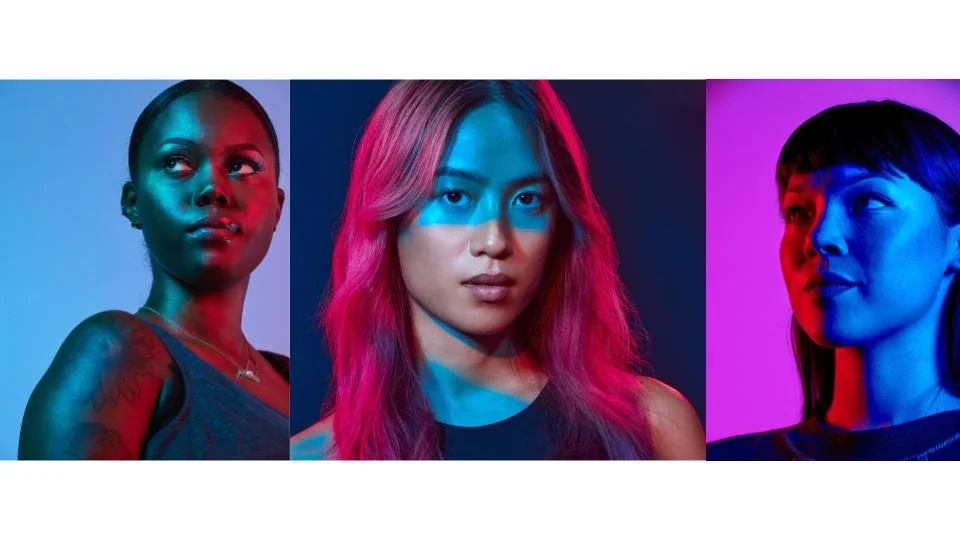

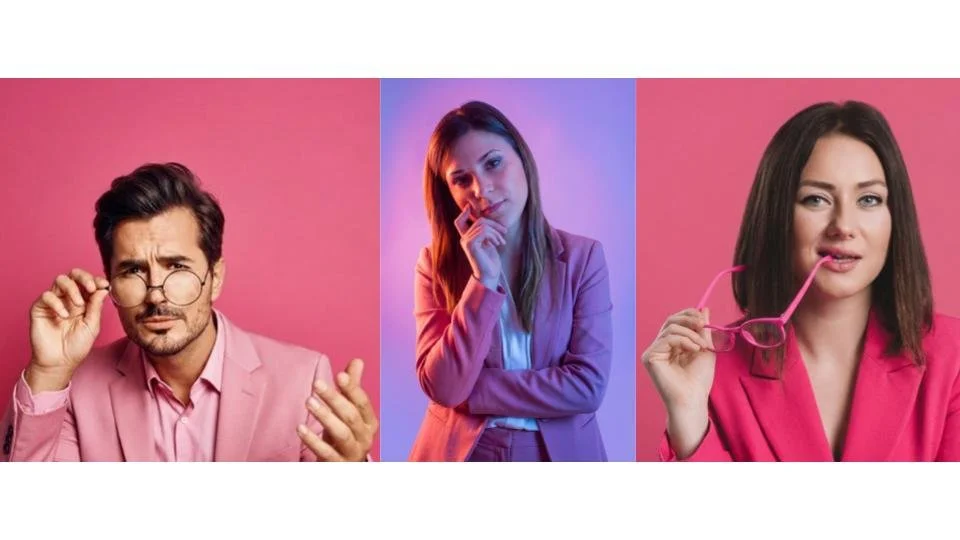


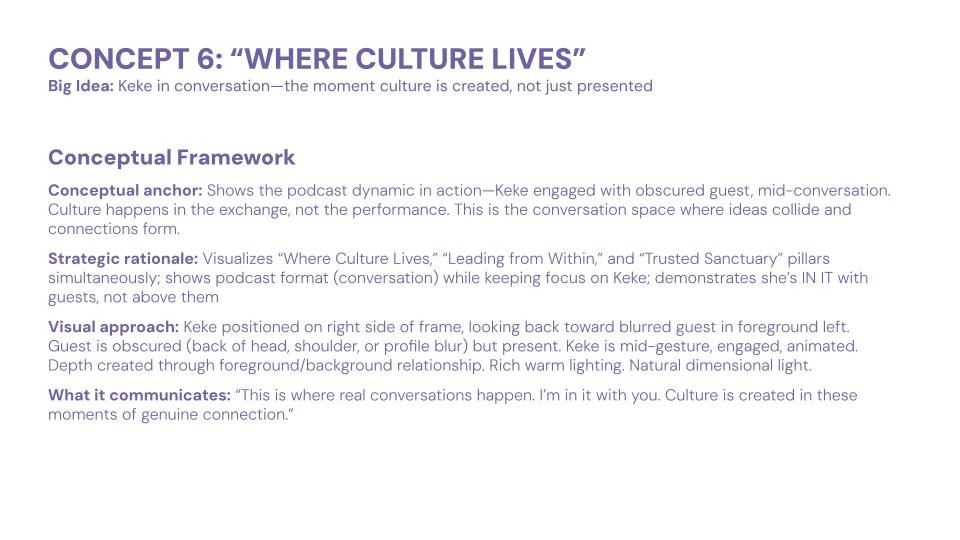








Round 2 — Weavy Generation
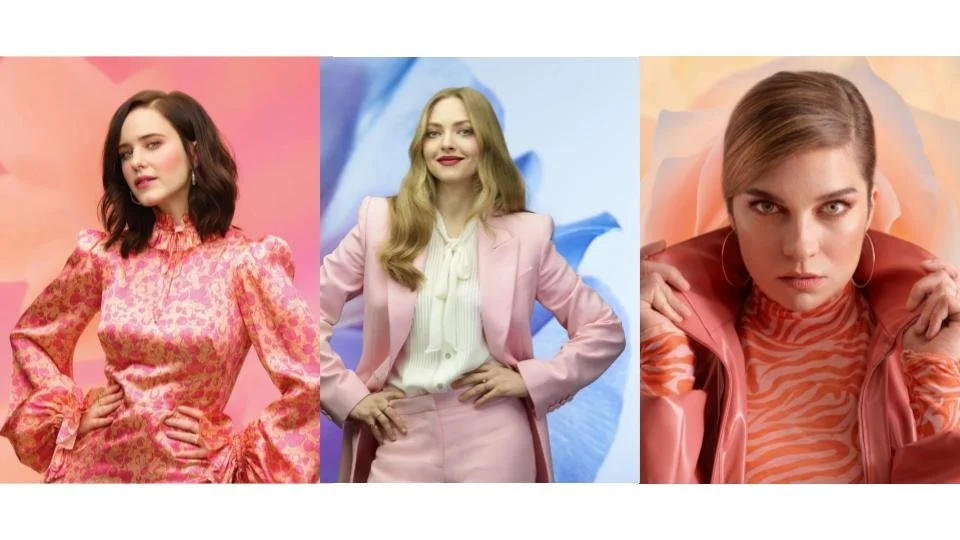
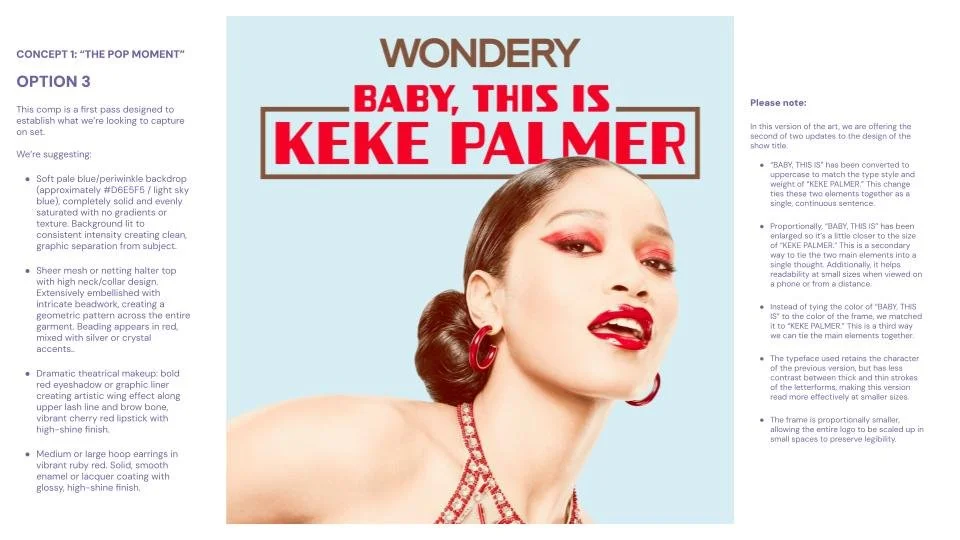
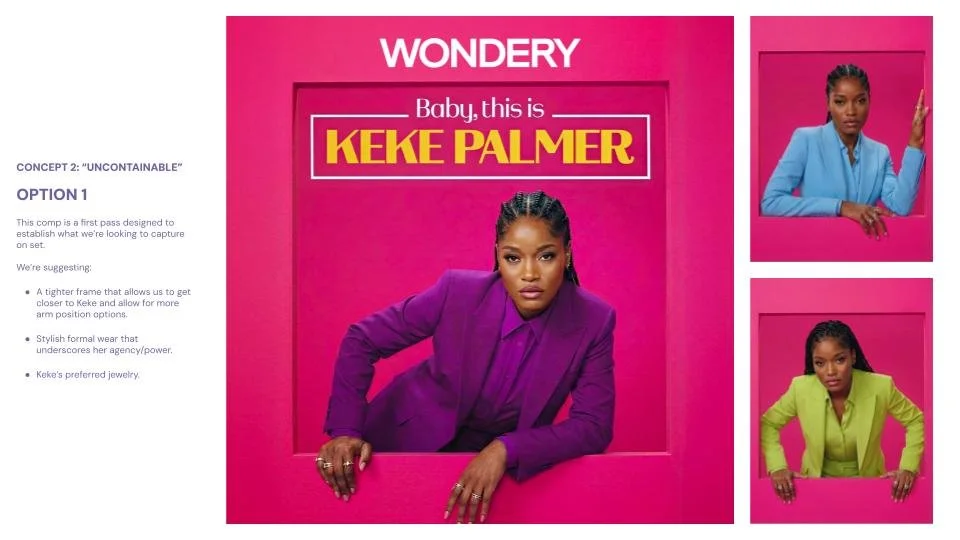
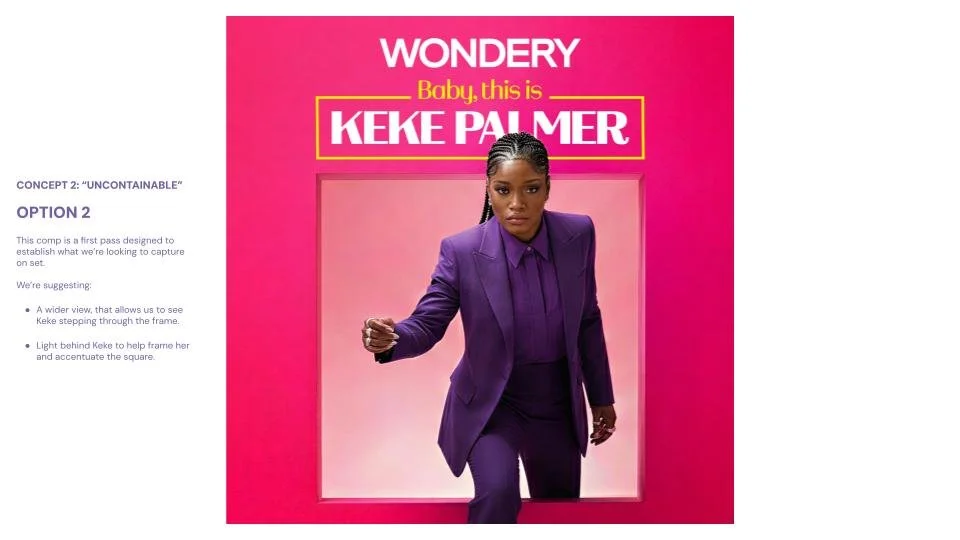
Traditionally, comps are Frankensteined together in Photoshop — pulling from old shoots, stock, whatever's available. For round two, I used Weavy to generate comps that matched Keke's likeness with controlled lighting setups, wardrobe, makeup, and facial expressions. Every option showed exactly what we intended to capture on set. No guesswork. No surprises. Complete buy-in from talent before a single frame was shot.
All images of Keke in the presentation comps are AI-generated.





The Shoot
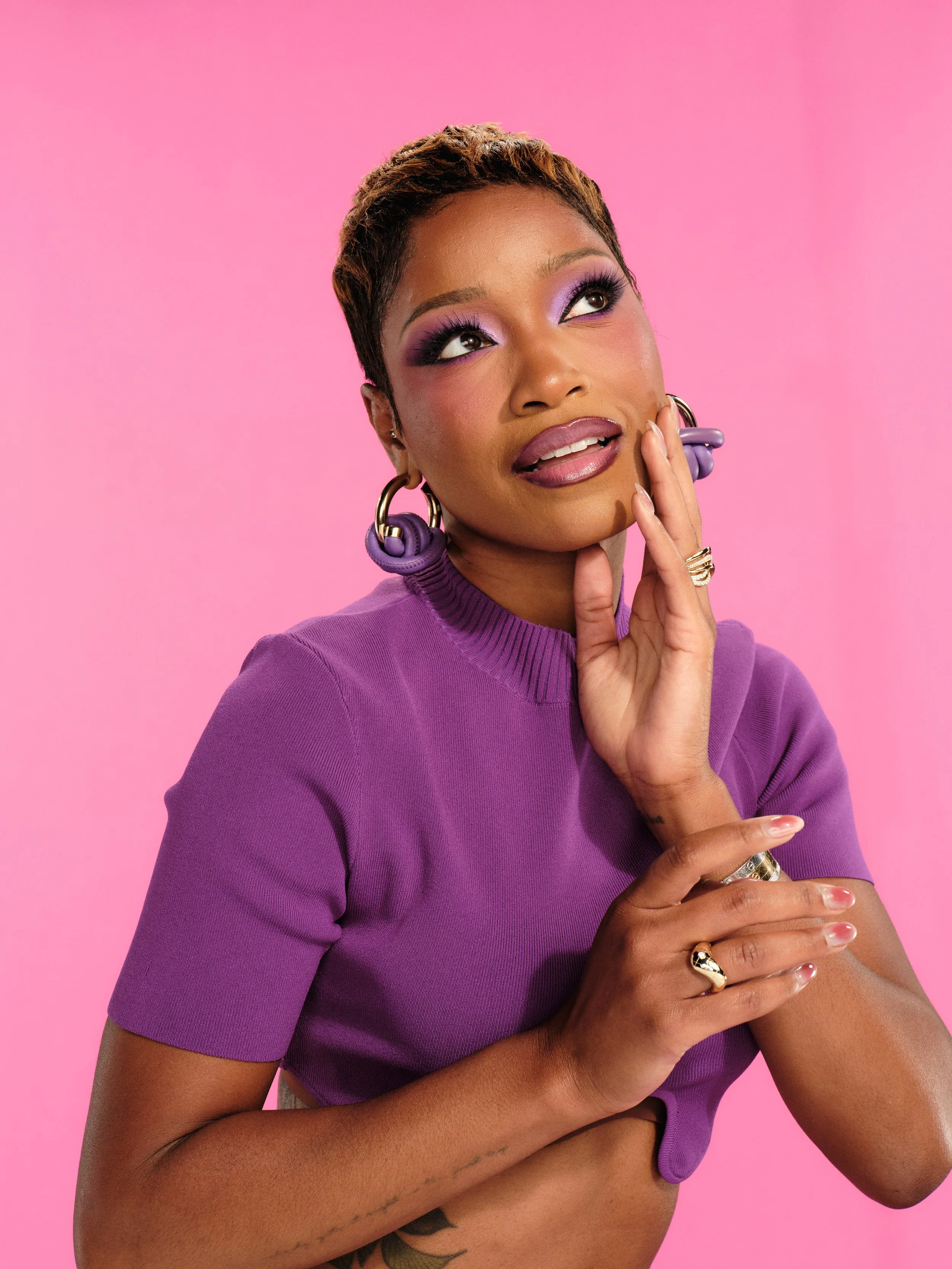
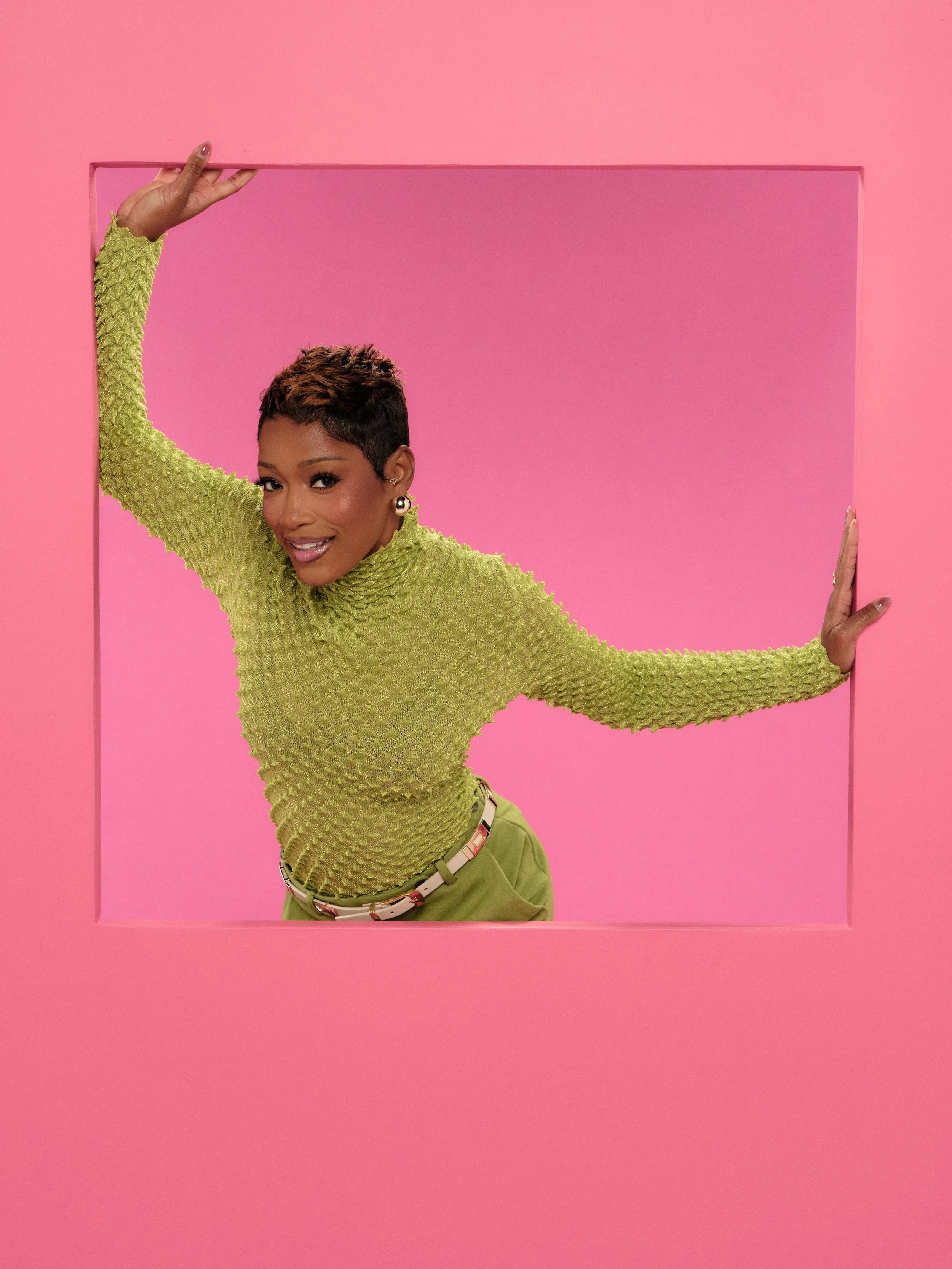
The shoot delivered exactly what the comps promised. These are raw, unretouched frames straight from set. Lighting, wardrobe, makeup, expression, set design — every detail was pre-visualized in Weavy and executed on set with precision. No last-minute pivots. No creative drift. Because Keke had already approved the direction through AI-generated comps built to her likeness, the day was spent capturing, not convincing.
To Be Continued...
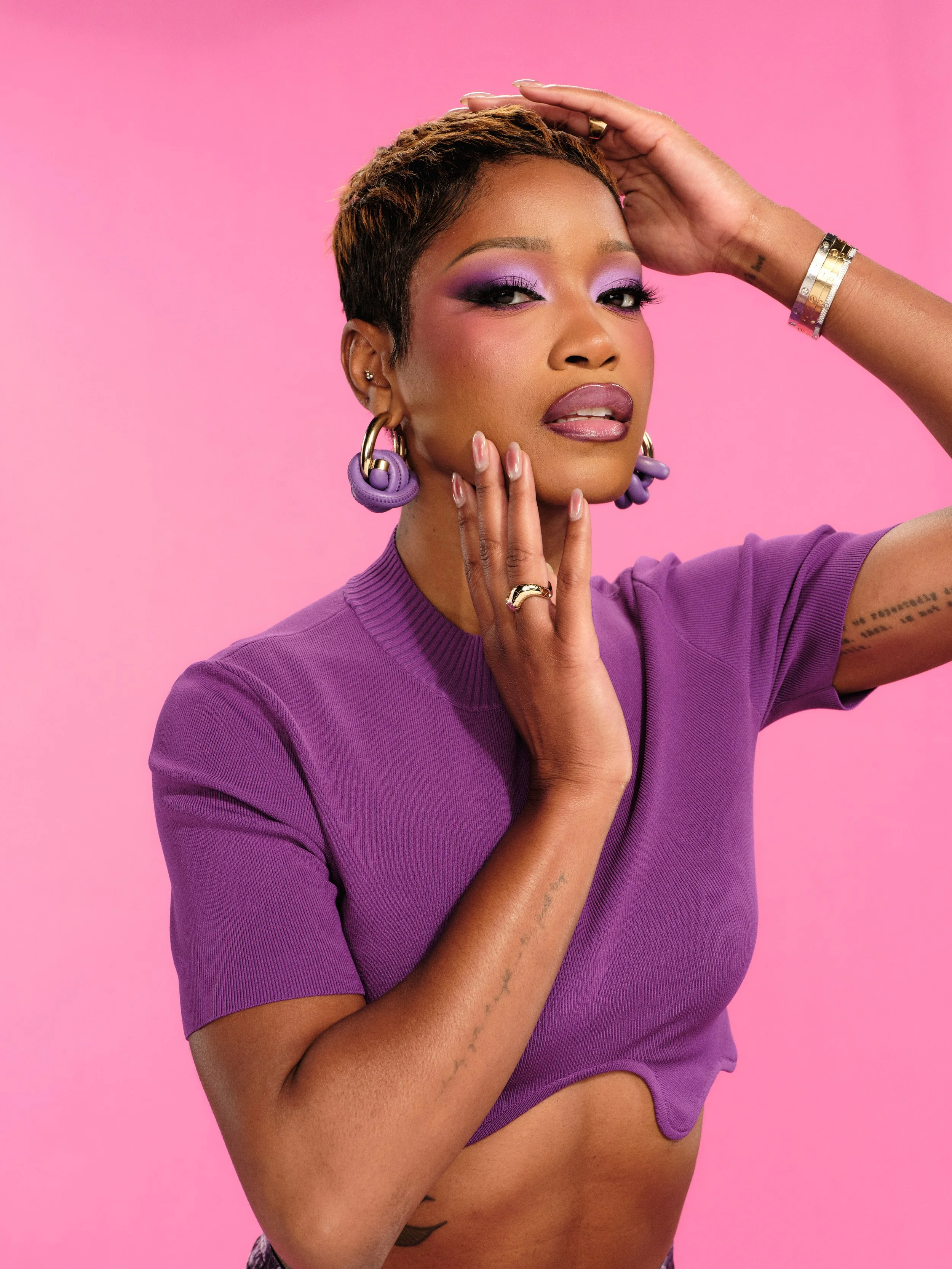
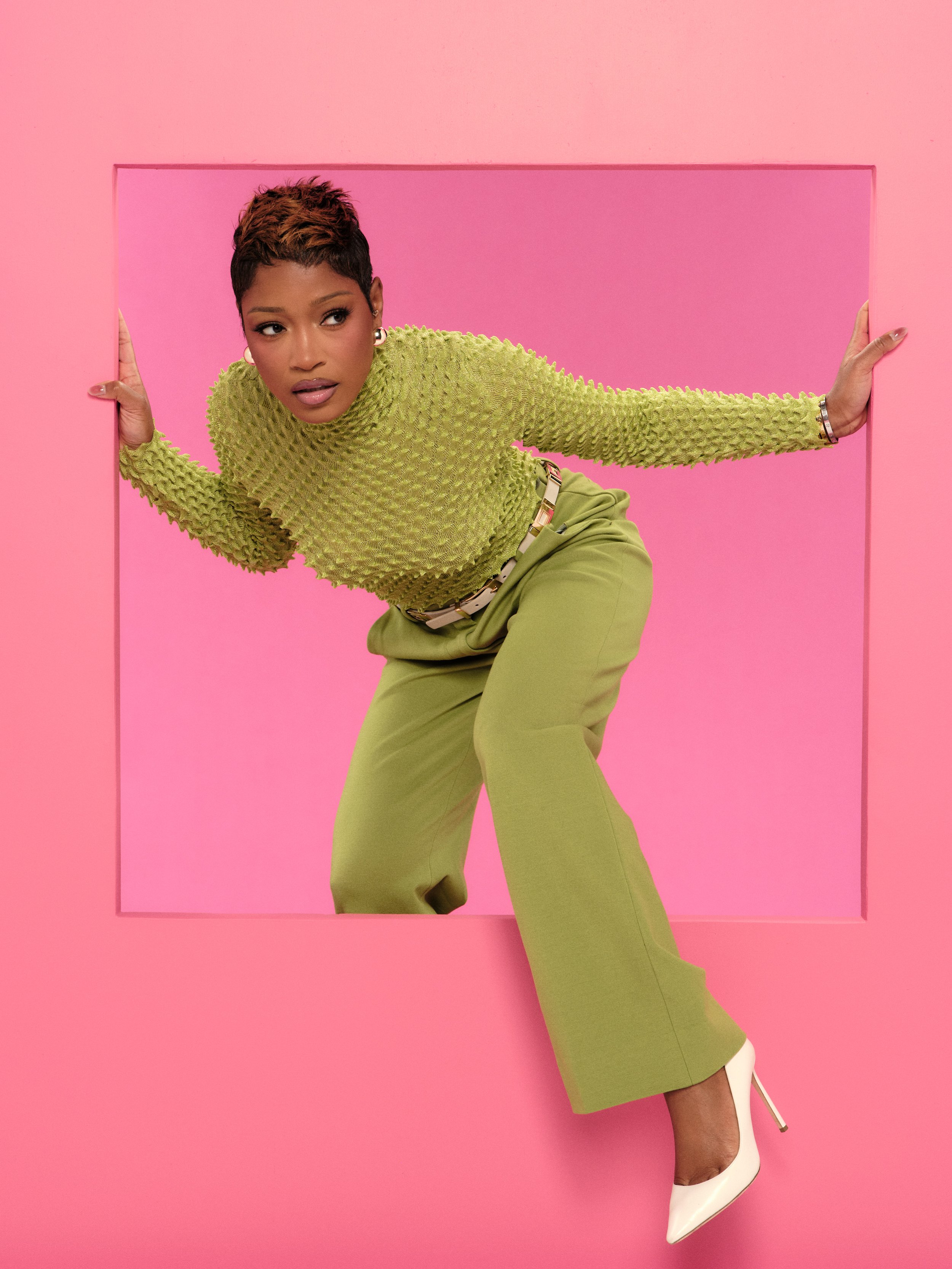
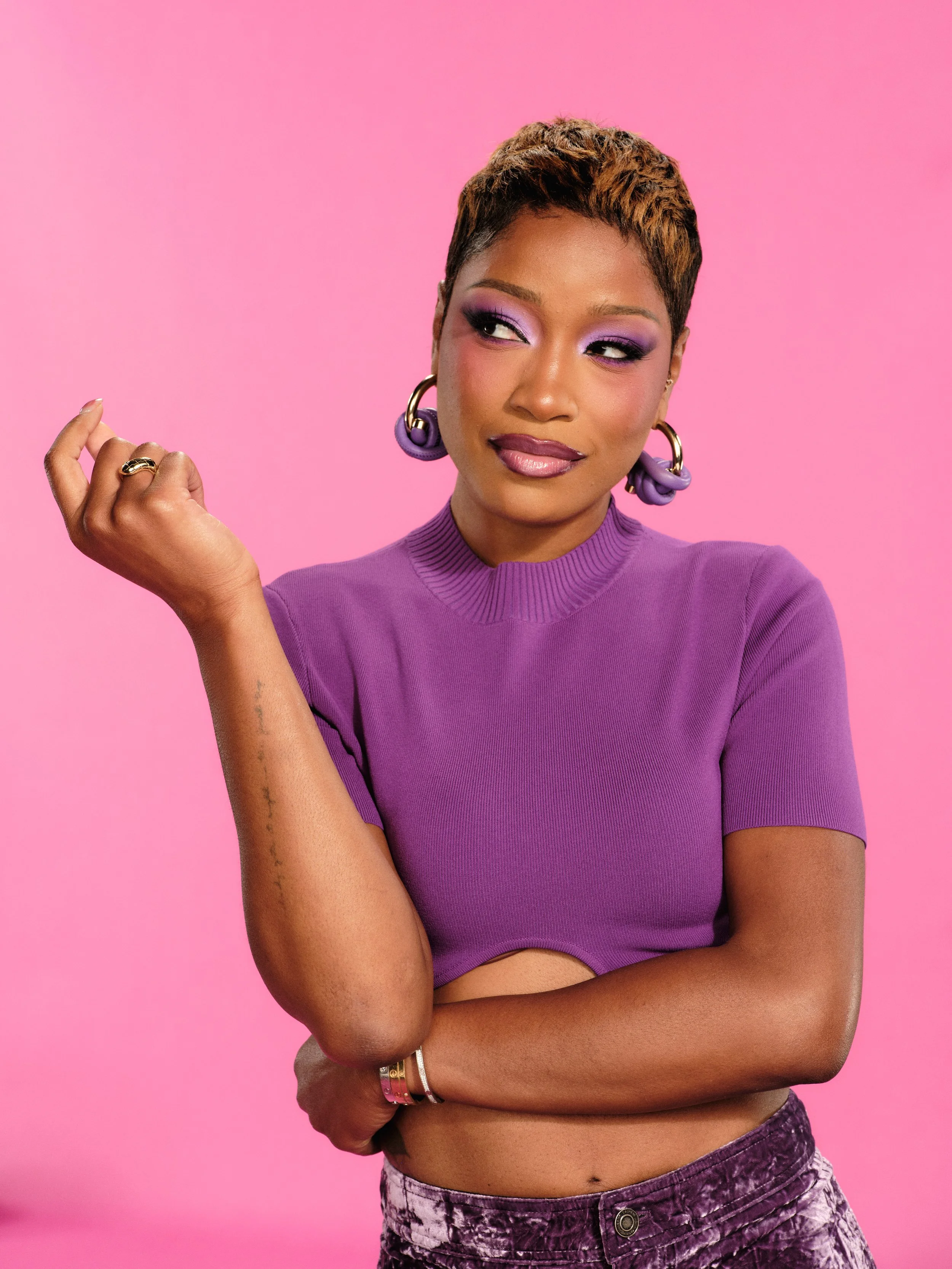
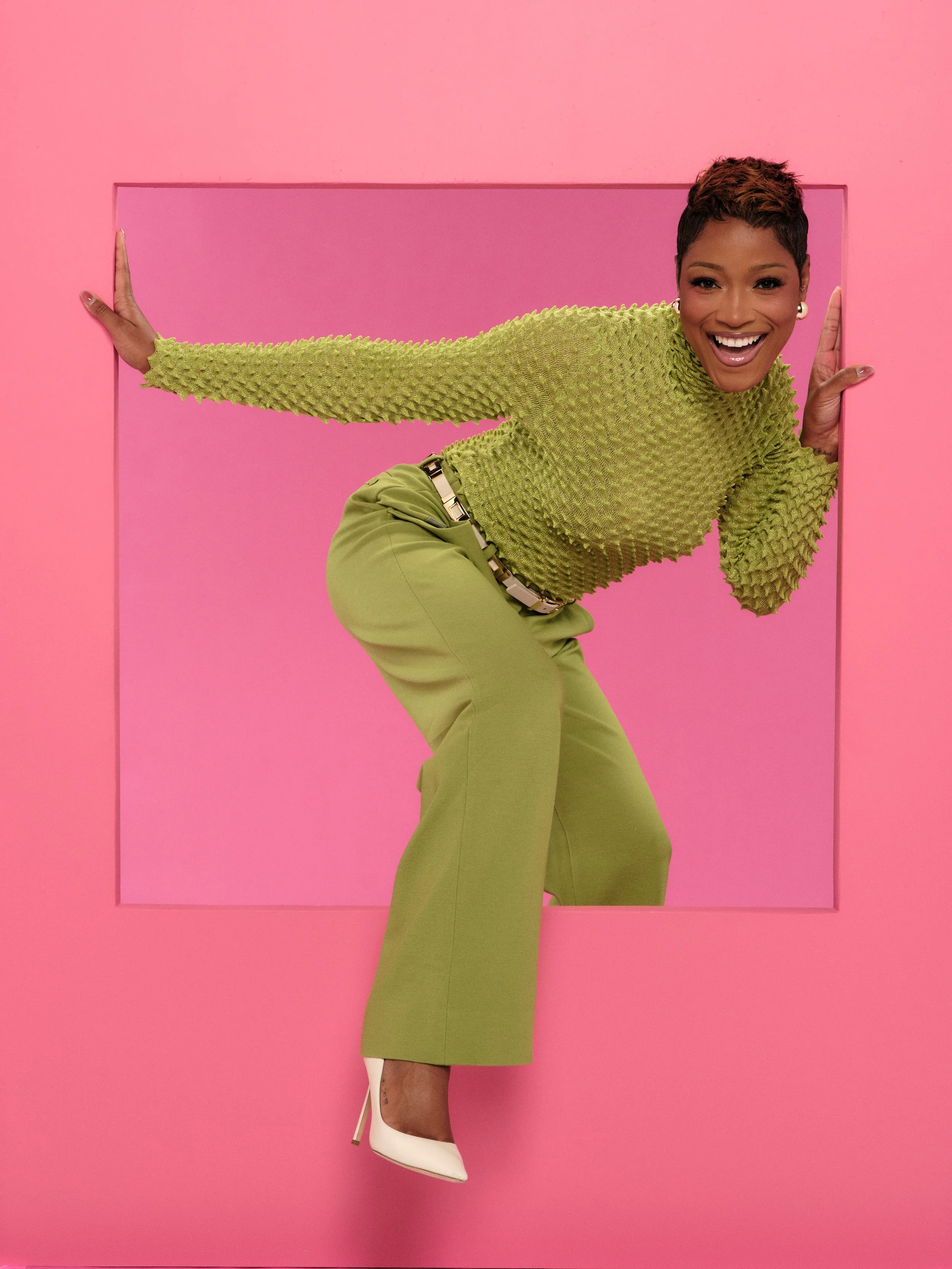
Keke Palmer Season 1 — Social
Case Study: Reclaiming
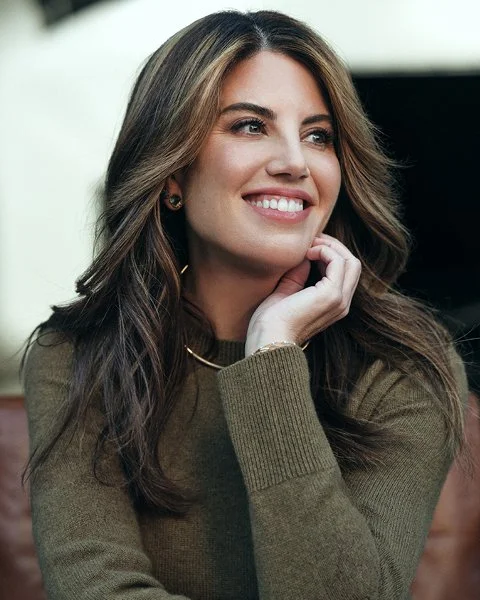
Reclaiming is an interview-based podcast where Lewinsky explores the idea of “reclamation”—the act of taking back something lost, stolen, or silenced—through intimate, empathetic conversations with guests ranging from actors and writers to activists and public figures. Drawing from her own experience of reclaiming her narrative after years of public scrutiny, Lewinsky creates a safe, vulnerable space where people share deeply personal stories about identity, resilience, and transformation. Rather than offering prescriptive advice, the show emphasizes honest dialogue and human connection, with each episode ending by asking guests what they are still striving to reclaim.
We worked closely with Monica from the earliest stages of pre-production straight through to the podcast’s release and beyond to establish her as a warm, approachable presence.
Upon release, Reclaiming more than doubled its total plays and engagement goal.

Our Collaborative Brief
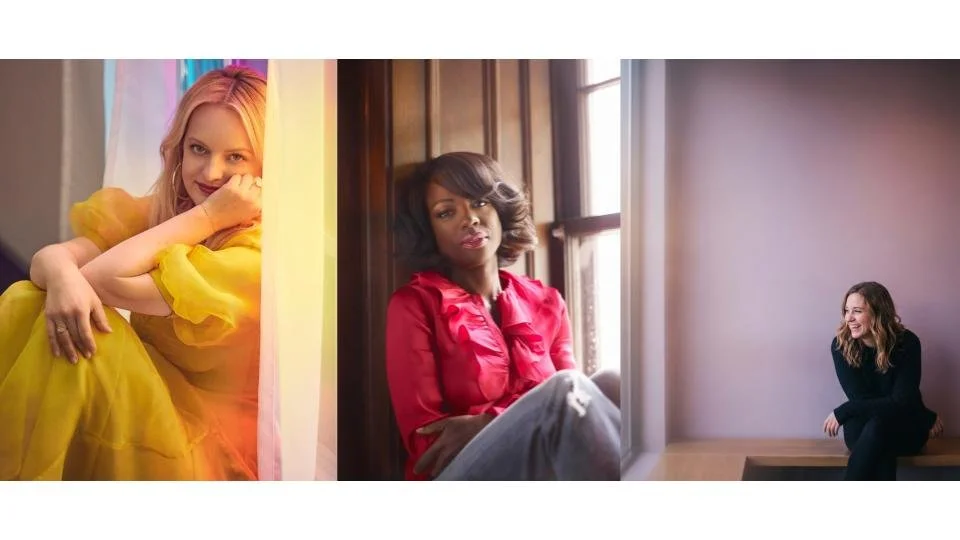
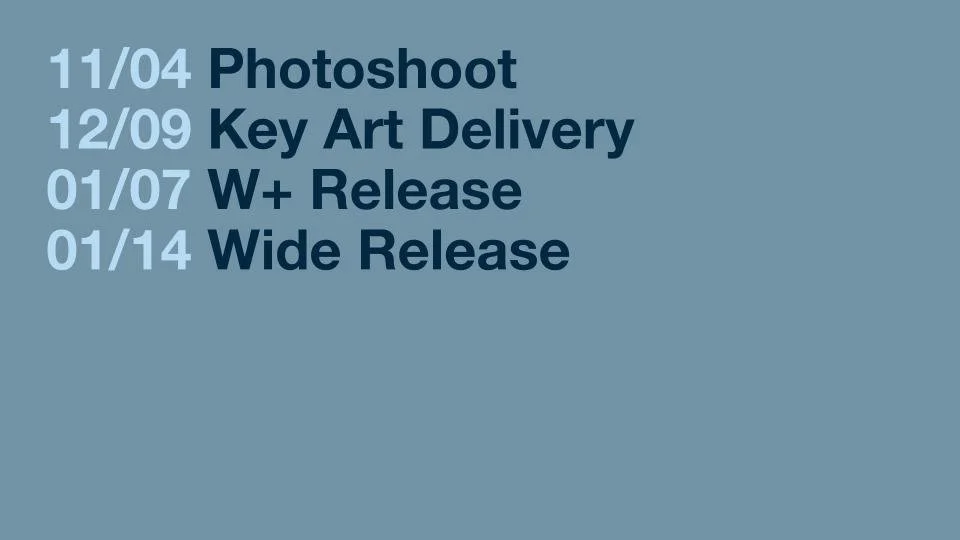
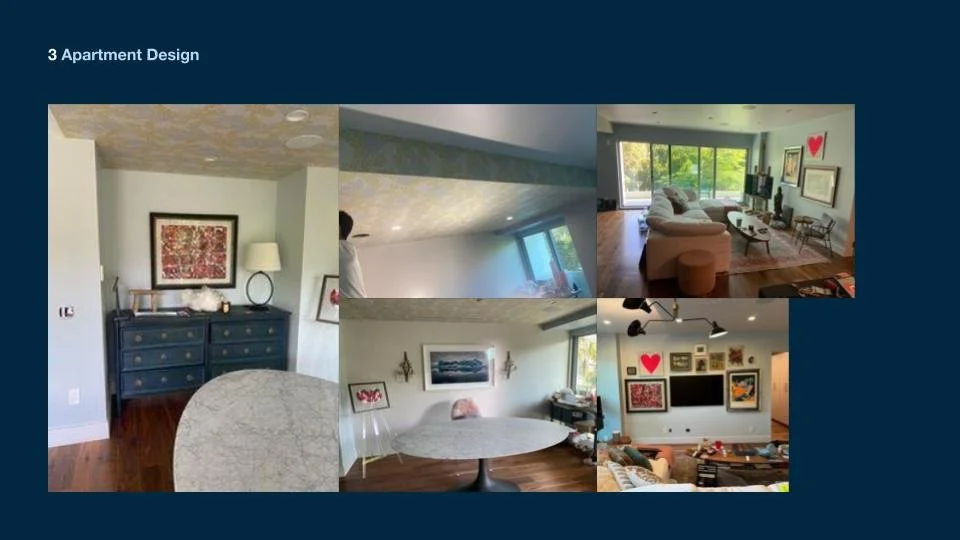
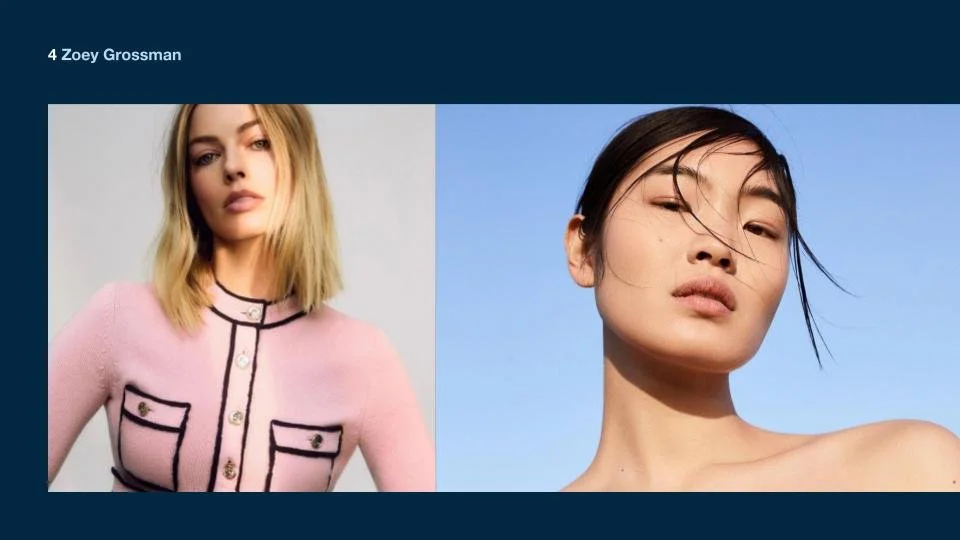
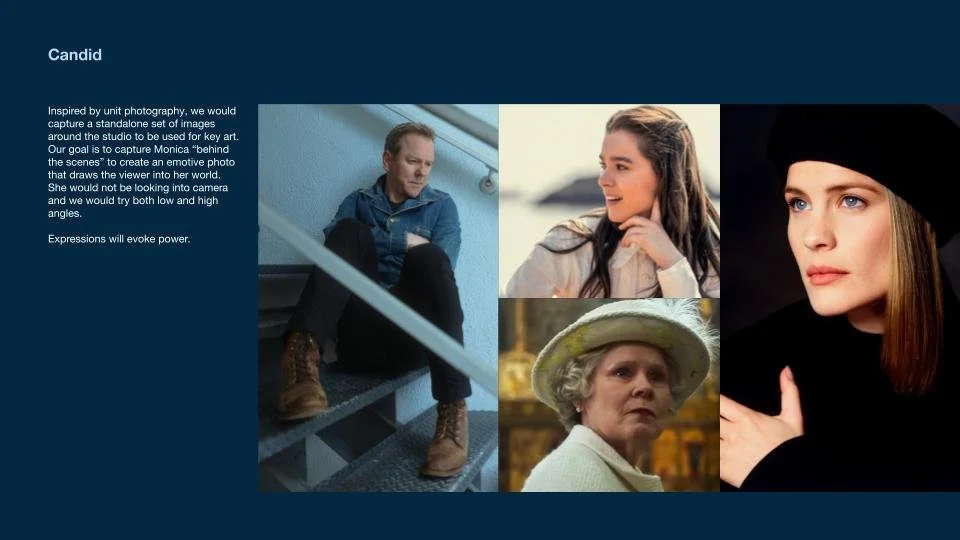
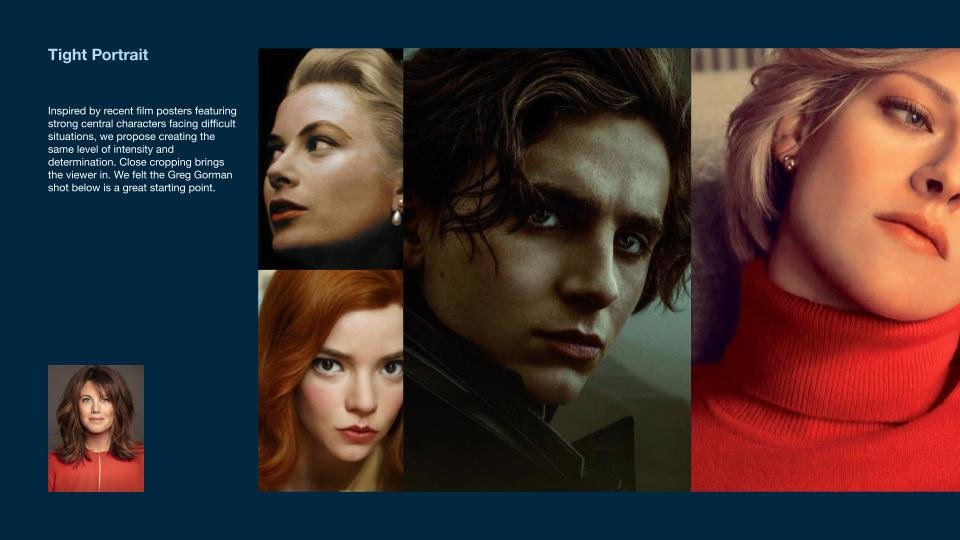
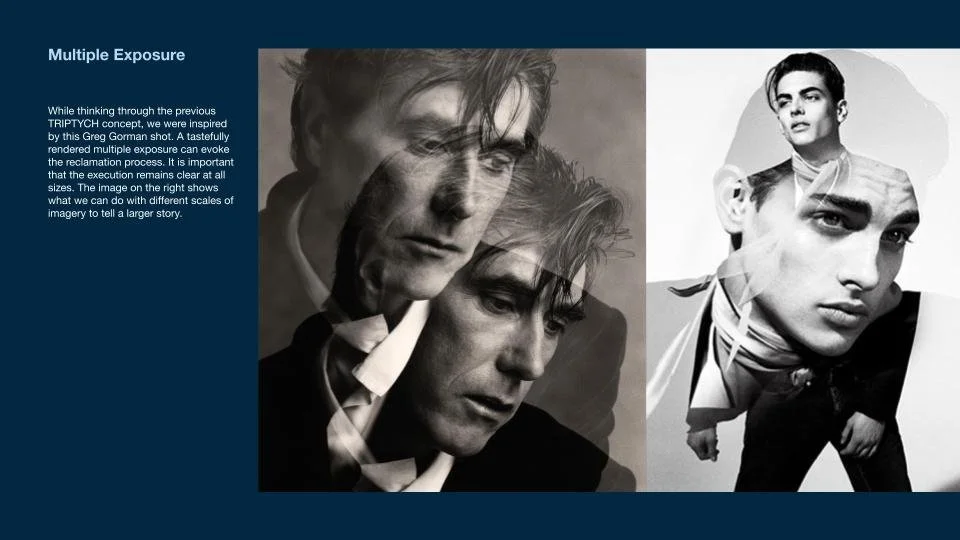
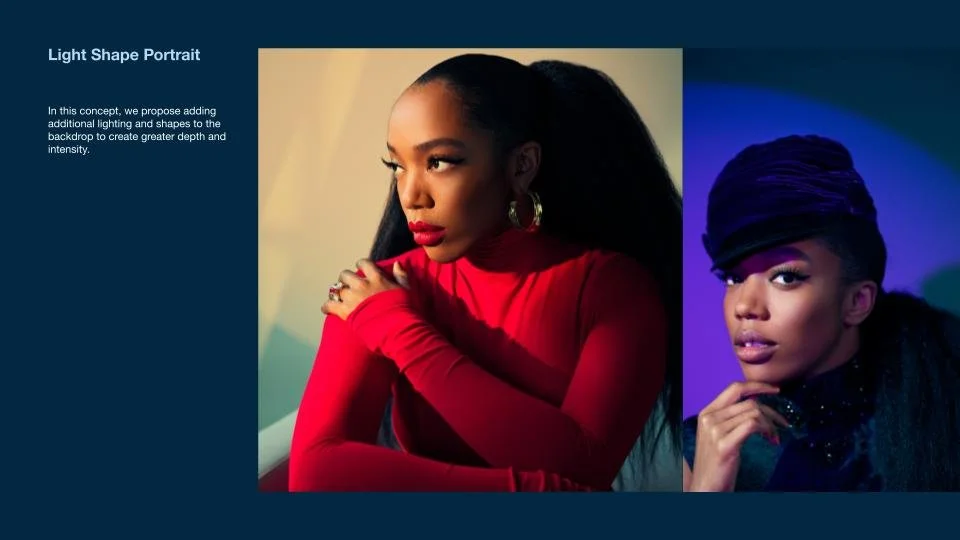
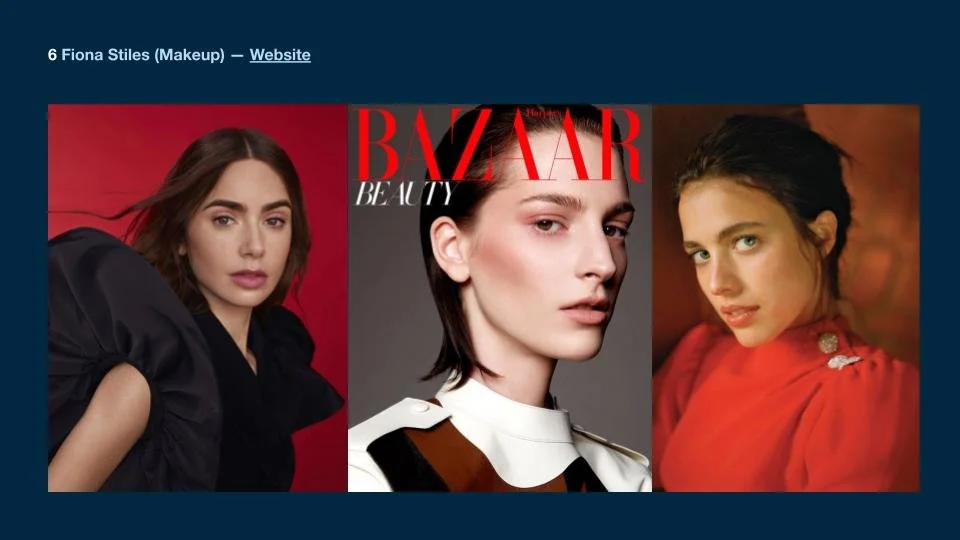
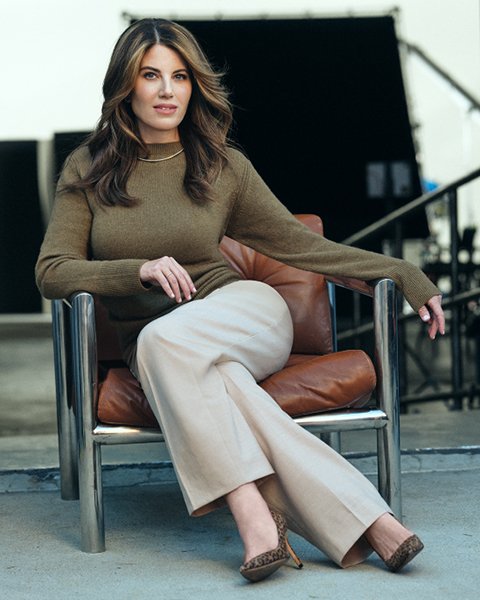
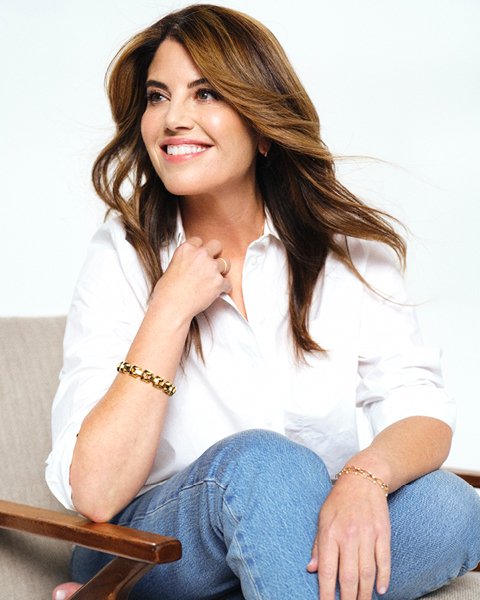
Before we stepped into the studio, we built a comprehensive pre-shoot deck that functioned as both a strategic alignment tool and a creative roadmap. This document did the essential work of bringing everyone—Monica, the photographer Zoey Grossman, stylists, and our internal team—into the same conversation about who Monica is today and how we wanted to capture that evolution. The deck walks through existing photography to establish context, presents a carefully considered color palette drawn from her apartment's aesthetic, profiles our photographer and creative team, and explores multiple shoot concepts, ranging from candid behind-the-scenes moments to tightly cropped portraits to more experimental approaches, such as multiple exposure. It documents everything from wardrobe direction to furniture selection to typography references, ensuring nothing was left to chance or assumption. This level of specificity was crucial because we were making a deliberate departure from the armored, high-contrast imagery that had dominated Monica's recent editorial presence. We wanted soft, natural lighting. Approachable wardrobe. Expressions that invite rather than deflect. The pre-shoot deck became our shared reference point for capturing Monica as the warm, intellectually curious host she’s become—someone confident enough to lower the walls rather than reinforce them. Every creative choice is traced back to this document, which is why the final images feel cohesive and intentional rather than accidental.













The Shoot
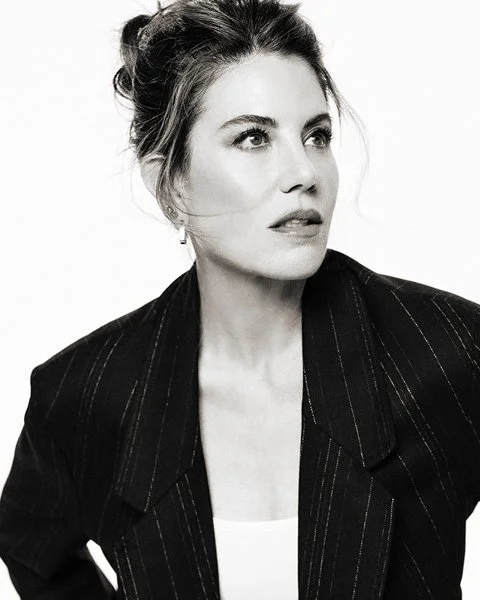
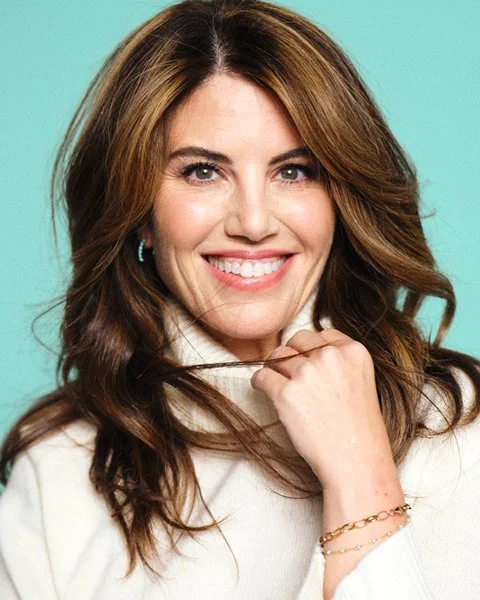
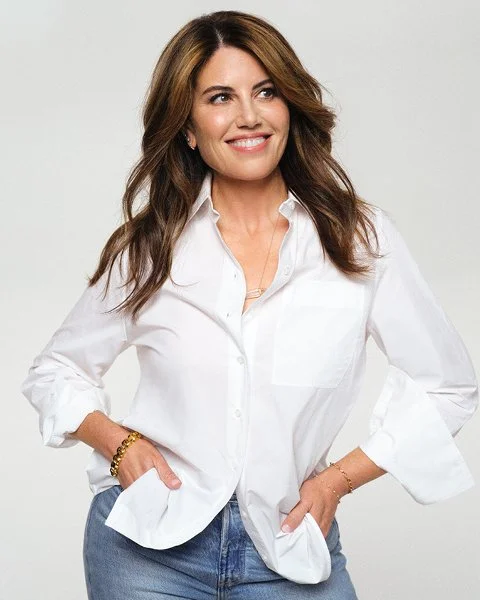
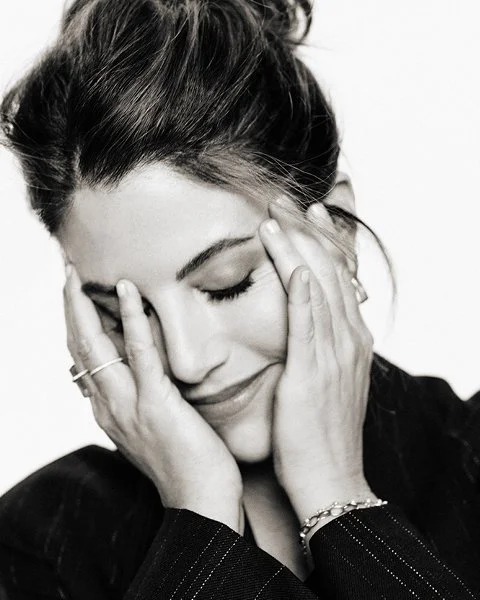
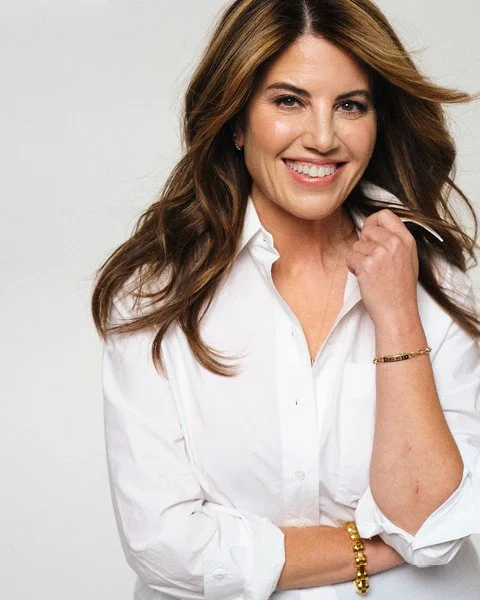
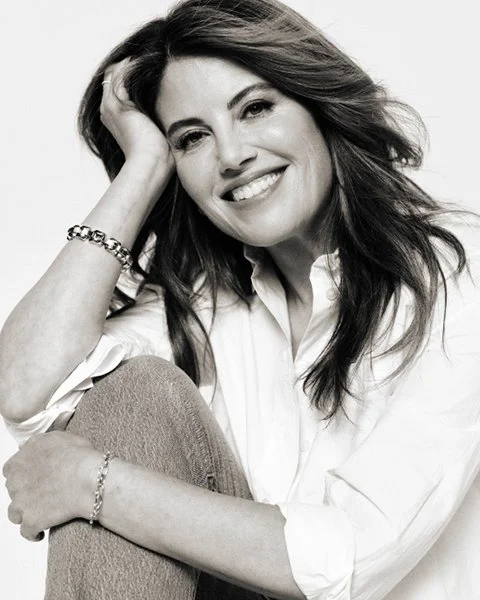
While Monica Lewinsky’s recent editorial photography has consistently portrayed her through a lens of strength and armor, emphasizing her resilience and formidable presence, we deliberately chose to reveal a different facet of who she is today. Rather than the steely resolve that has become her visual signature, these images celebrate Monica as the warm, intellectually curious host she’s become. The wardrobe choices—soft neutrals, relaxed button-downs, and earth-toned knits—work in harmony with natural lighting to create an immediate sense of approachability and invitation, rather than distance. You see it in the unguarded moments: genuine laughter, thoughtful expressions, the ease of someone sitting cross-legged or leaning back into a chair without performance or pretense. Even the single black-and-white portrait, which could have veered toward the dramatic aesthetic that's defined her recent press, instead captures introspection rather than defense. These images document her accessibility and authentic presence, showing someone who has transformed not just her public narrative but has grown into a role where she invites others in rather than keeping the world at bay. It’s a portrait of evolution: from someone who had to build walls to someone confident enough to tear them down.
Social Clips
Just as we chose to reveal Monica's approachable, authentic side in our photography, her social content strategy mirrors this same philosophy of genuine connection. TikTok users are notoriously resistant to heavy-handed marketing—younger audiences can immediately detect and reject overly produced, corporate messaging. In keeping with presenting Monica as the thoughtful, accessible host she truly is, we maintained the simplicity and directness that resonates with these platforms. Her advice remains unfiltered and straightforward, supported by minimal graphics and restrained typography that never compete with her authentic voice. The result feels conversational rather than promotional, allowing her natural warmth and intellectual curiosity to shine through without the barrier of over-polished presentation. It's content that invites engagement rather than demanding attention—perfectly aligned with both her evolved public persona and the authentic communication style that younger audiences value.
Transforming Wondery’s Key Art Process
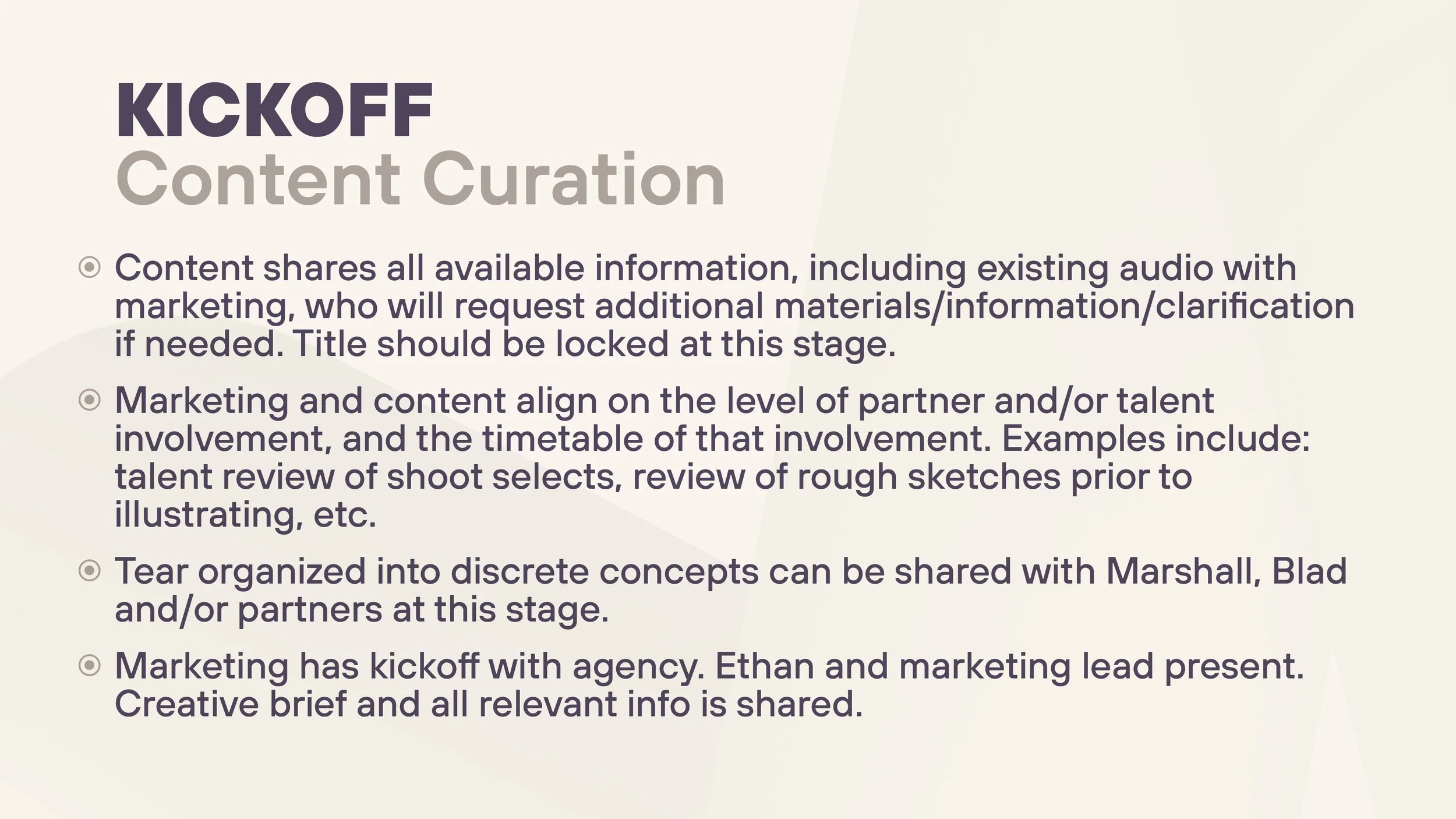
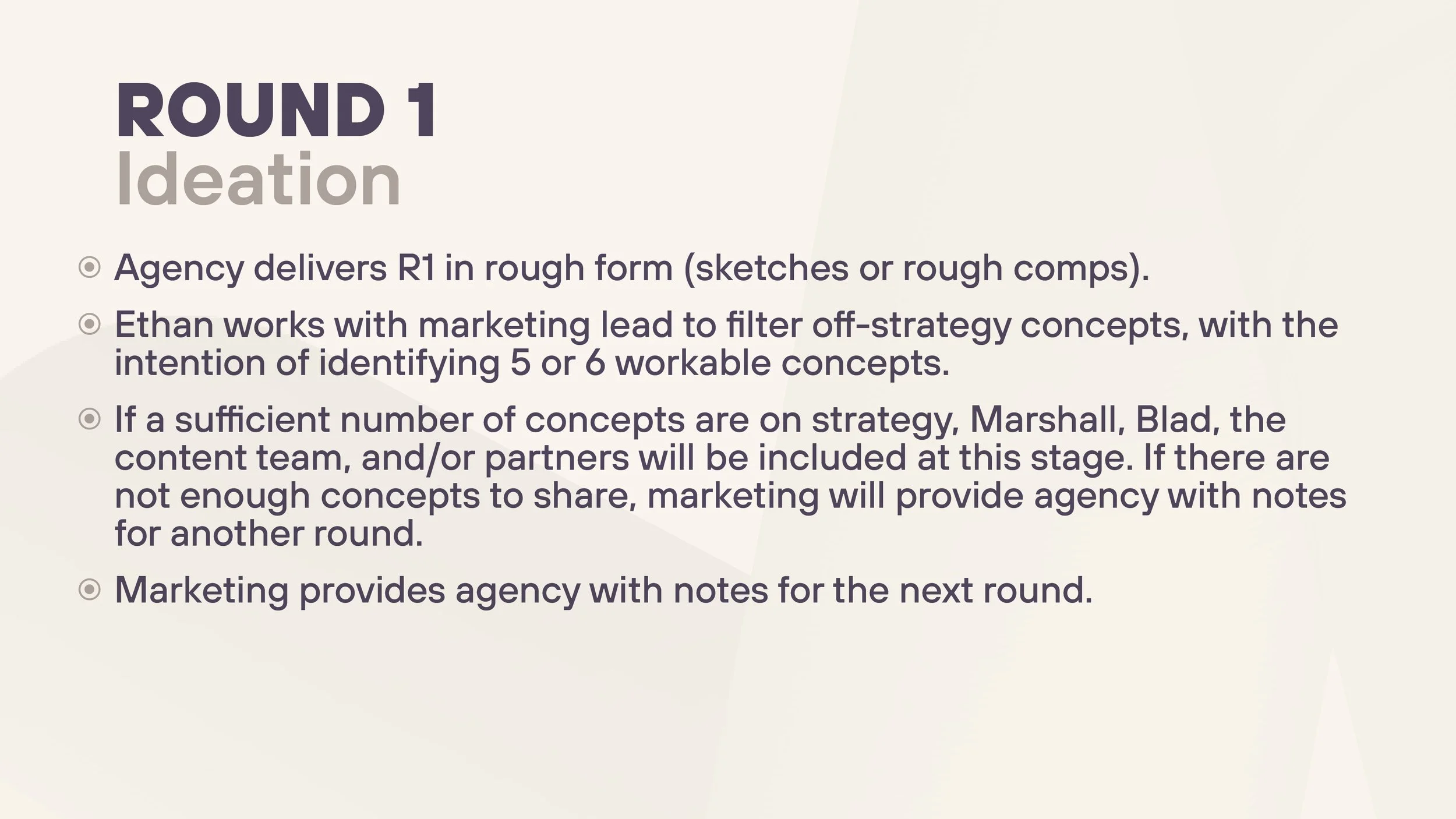
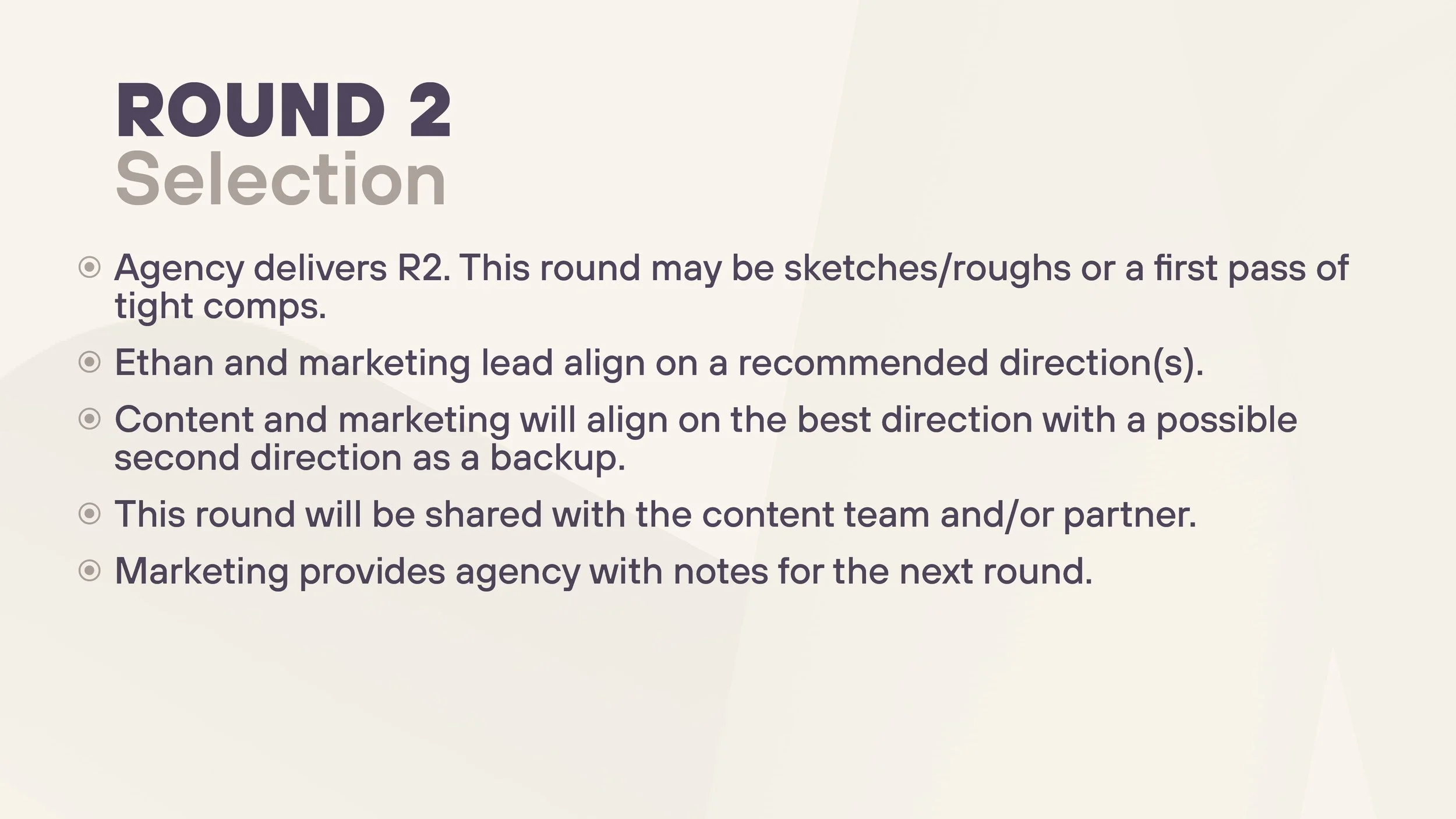
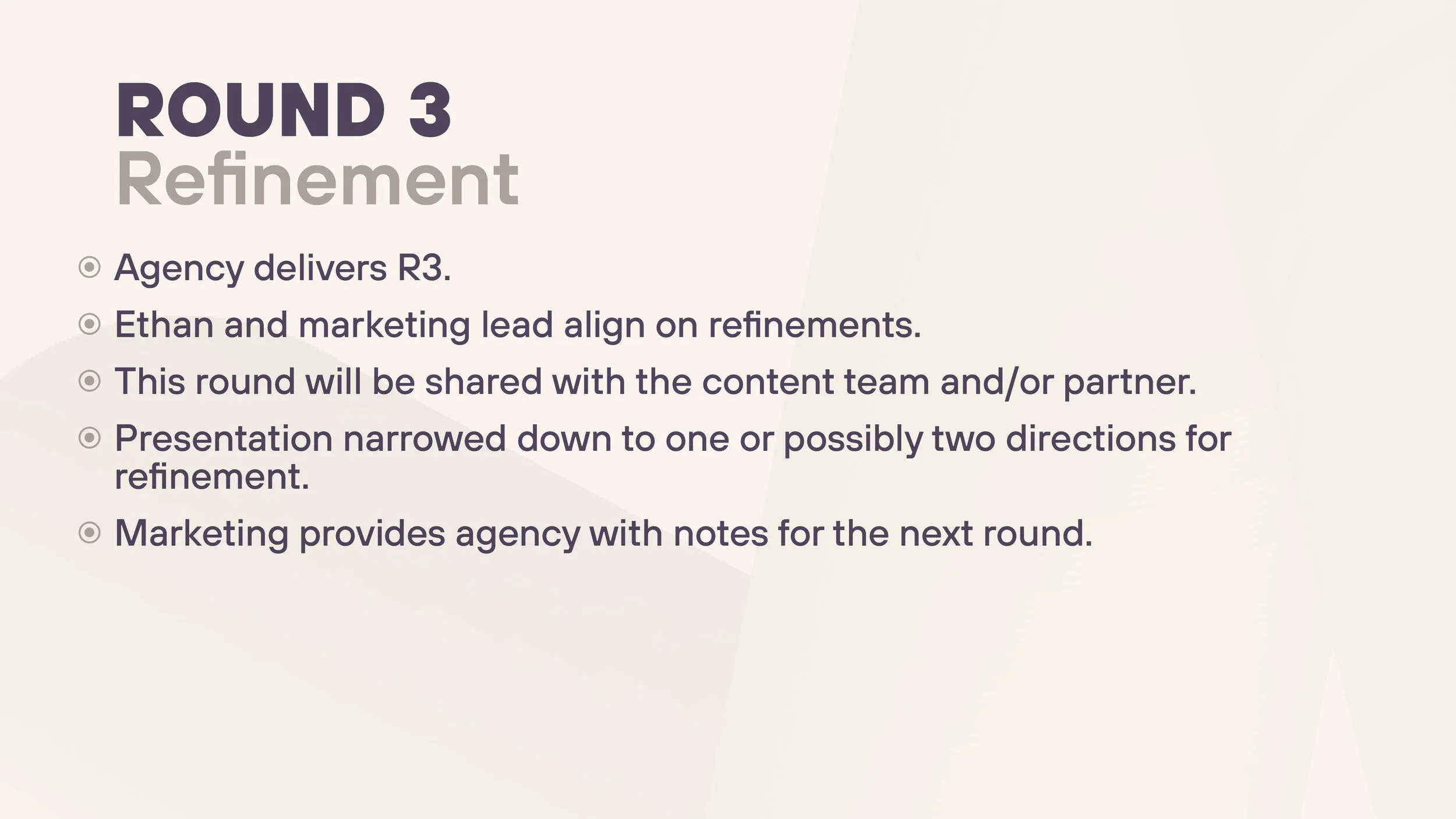
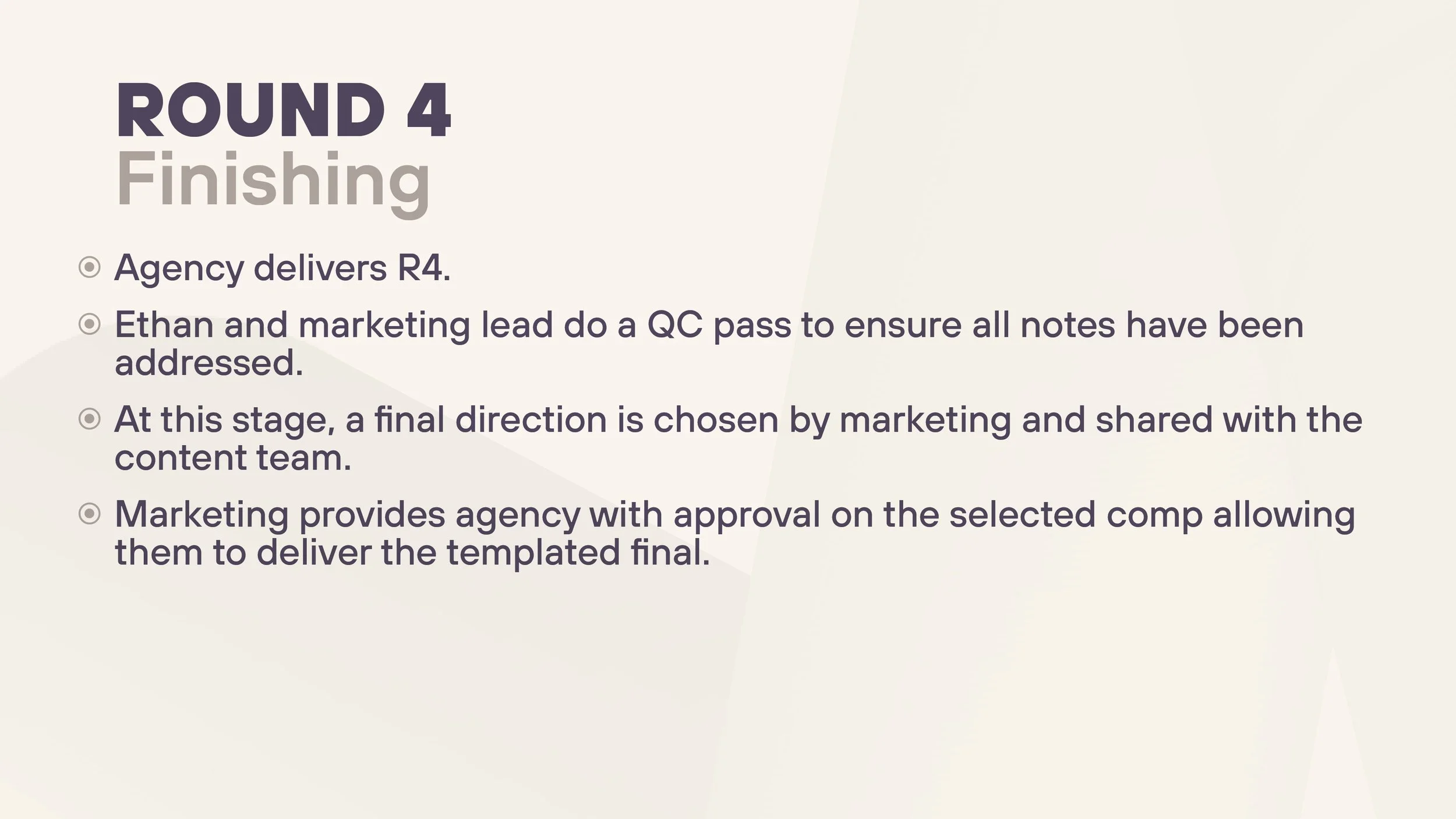
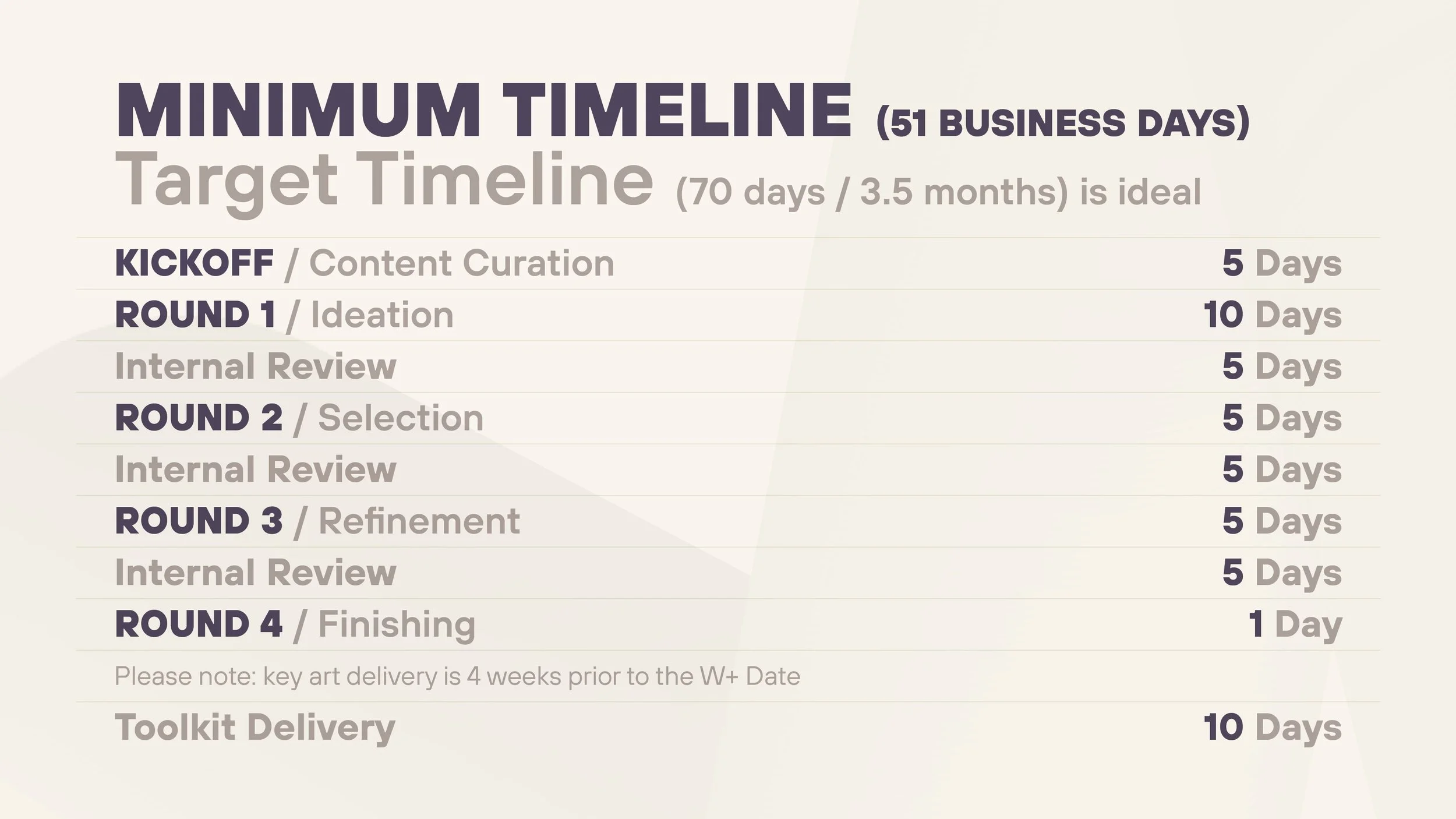
When I joined Wondery, the creative development process had evolved organically rather than strategically—timelines were unpredictable, costs varied wildly project to project, and there was no shared understanding of who needed to weigh in at which stage. One of my first priorities was overhauling this system entirely. I conducted stakeholder interviews across content, marketing, and production teams to understand where the friction points lived, then built a standardized framework from the ground up. The result was a cross-functional workflow that formalized every stage of creative development—from initial kickoff and content curation through iterative rounds of ideation, selection, refinement, and finishing—with clear timelines, defined review periods, and explicit decision-making authority at each gate. This wasn't about adding bureaucracy; it was about creating predictability. By implementing this approach, we shortened development cycles, made delivery schedules reliable enough to plan campaign launches around, and significantly reduced costs by eliminating the expensive late-stage revisions that came from unclear expectations. Below is the live process deck I distributed across teams and updated quarterly as we refined the system based on what we learned.